
A scooter founder now wants to run AI in orbit

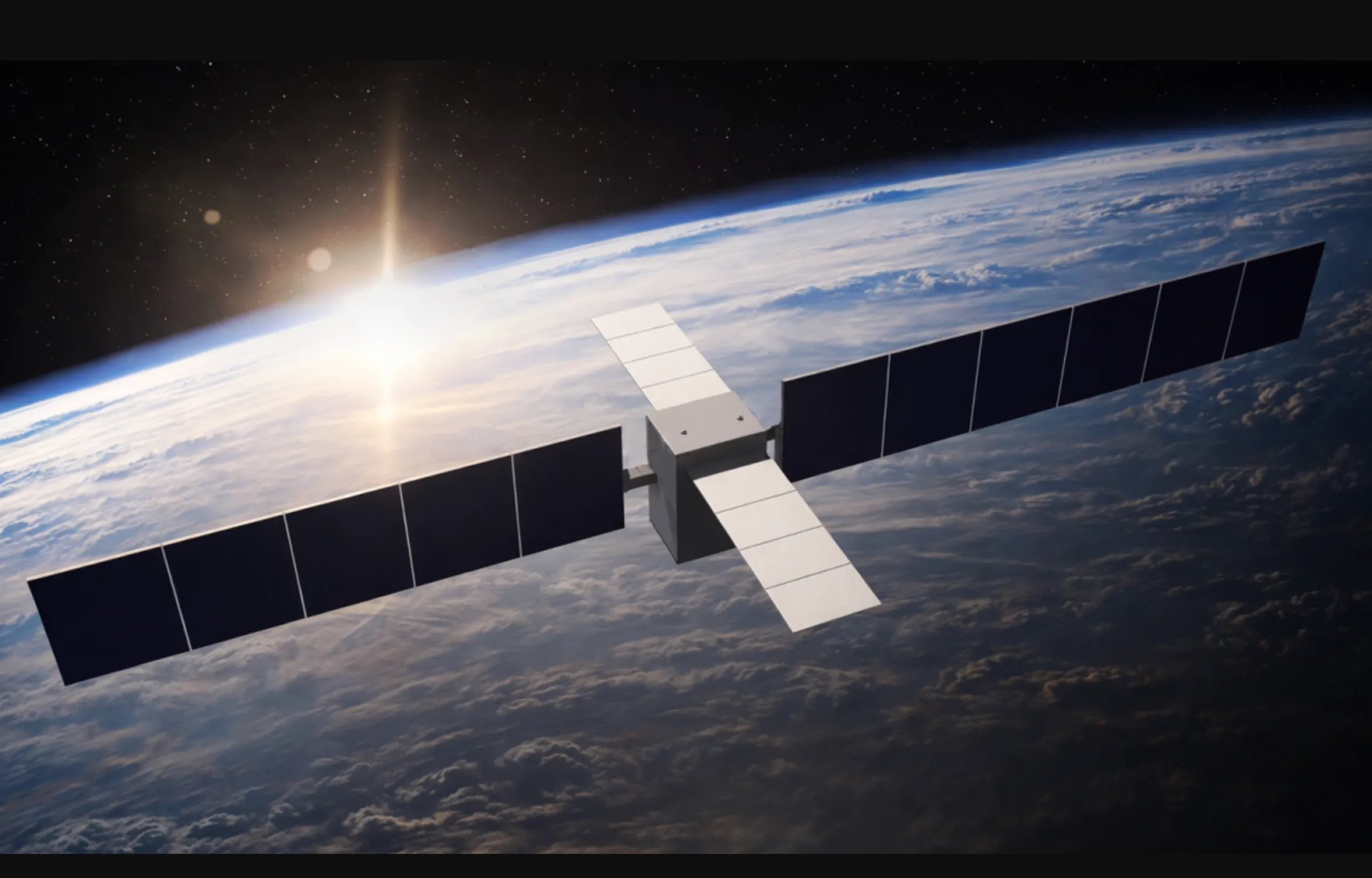
Orbital just raised $5 million to put AI compute in space, betting on cheaper launches to beat Earth's strained grids.
Key Takeaways
- Orbital raised $5 million to build AI data centers in low Earth orbit, where solar power is constant.
- Full-scale deployment depends on cheaper launches, with the company waiting on SpaceX's Starship to lower costs.
- The hardest barriers are physical, since cooling and unproven technology threaten commercial viability.
A Los Angeles startup wants to move AI computing off the planet and into low Earth orbit. Its founder once ran an e-scooter company, not a space firm.
The company, Orbital, raised a $5 million round to fund its first hardware. The plan targets continuous solar power and heat that radiates into space.
According to The Next Web, the round was an oversubscribed pre-seed led by a16z Speedrun. TechCrunch described the same $5 million as a seed round from the Speedrun accelerator.
According to TechCrunch, founder and CEO Euwyn Poon previously started e-scooter company Spin in 2017. He sold Spin to Ford the following year before joining the automaker.
The pitch starts with a real bottleneck for the AI industry. Power, land, cooling, and permitting all slow new data center builds on the ground.
According to The Next Web, the International Energy Agency expects data center electricity use to more than double by 2030. That projected demand reaches around 945 terawatt-hours, near Japan's annual consumption.
Orbital plans to spread compute across many small, independently deployable satellites. That distributed design lets the company scale the constellation satellite by satellite.
According to both reports, the hardware is built around Nvidia's announced Space-1 Vera Rubin-class GPUs. Each production satellite is designed for 100 kilowatts of compute aimed at AI inference.
The timeline and the rocket question
According to The Next Web, a demonstration called Pathfinder would fly a GPU payload on a Falcon 9 in 2027. TechCrunch reported a demo flight first, then a data-processing spacecraft in 2028.
The two outlets also differ on the long-term scale. The Next Web cited a vision of more than 100,000 satellites and over 10 gigawatts.
According to TechCrunch, Poon framed the nearer goal as 10,000 satellites delivering a distributed gigawatt. He said full scale depends on SpaceX bringing its Starship rocket online.
According to TechCrunch, Poon said Falcon 9 prices make the business case not economically feasible today. Rivals like Starcloud are making a similar bet on cheaper future launches.
Why the doubts are physical
According to The Next Web, even SpaceX has warned that orbital data centers rely on unproven technologies. The same report noted they may never reach commercial viability.
According to The Next Web, shedding a single megawatt could need about 1,200 square meters of radiator. That cooling challenge, roughly four tennis courts, is the core thermodynamic obstacle.
For now Orbital remains a small check, a future rideshare slot, and a very large idea. Whether the concept becomes real infrastructure still depends on physics and economics nobody has solved.
About the author
The Mixstackrr Team is a group of writers and editors with more than 10 years of combined experience in SEO and consumer tech. We test devices, dig through settings, and turn everyday tech problems into clear, step-by-step guides anyone can follow.