
AI Cheating Tools Beat Detectors, So Schools Need a New Plan

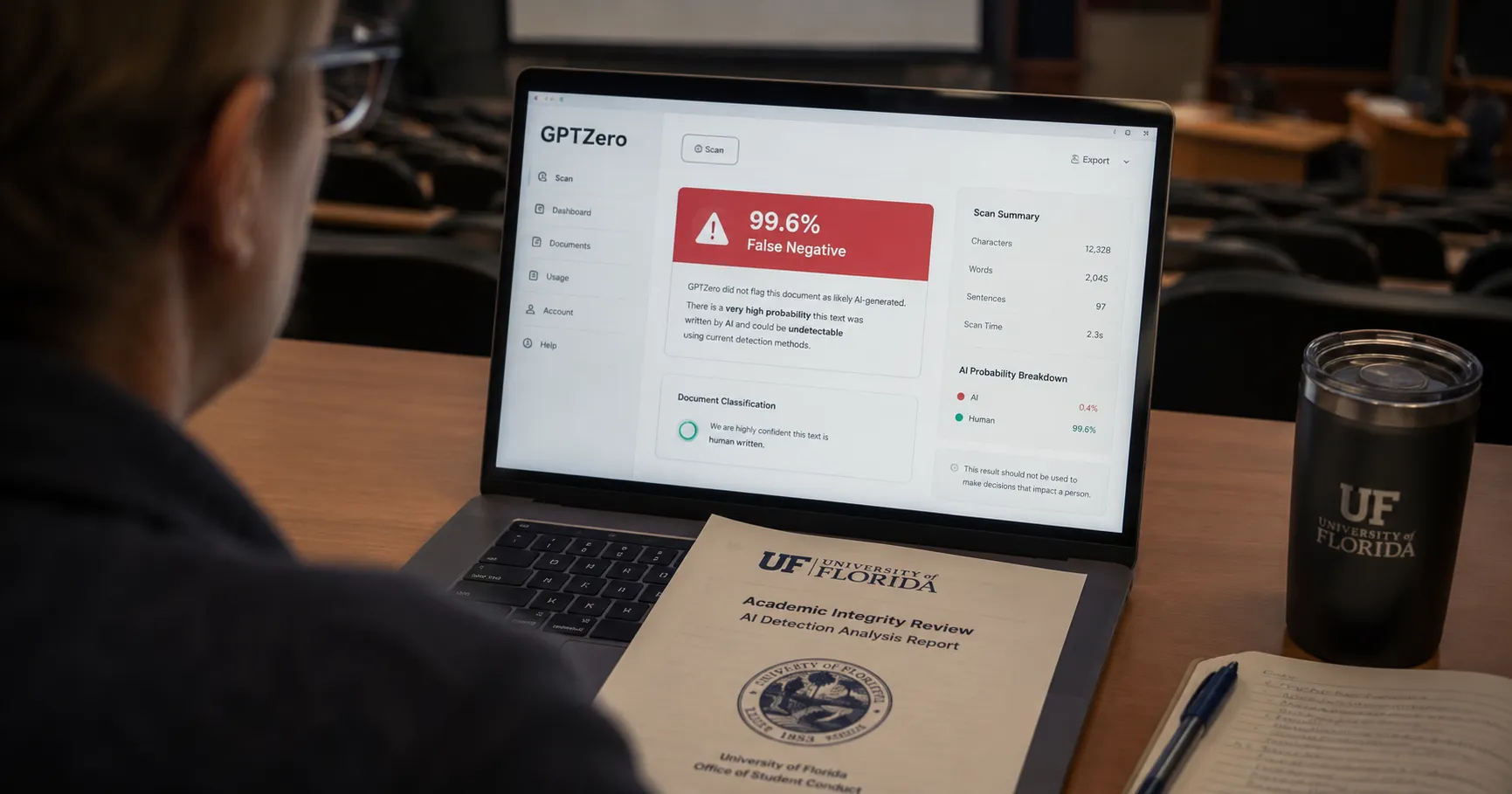
AI cheating apps now slip past school detectors that fail up to 99.6% of the time. Here is what parents and students should do instead.
Key Takeaways
- AI detection is unreliable, with false-negative rates reported as high as 99.6%, so disciplining students on a detector's word is risky.
- The same companies often sell both detection and evasion tools, making the arms race a structural dead end rather than a fixable gap.
- Schools shifting to oral and pen-and-paper exams, plus open AI use over hidden evasion, is the more durable response.
On this page
A wave of AI apps marketed on TikTok and YouTube now lets students hand in homework they never wrote. The pitch is always the same. Let AI do the work, and you will not get caught.
According to a New York Times investigation cited by The Next Web and Digital Trends, two tool types drive this. Humanizers rewrite AI text so it no longer reads like a chatbot. Autotypers drip words into a document over hours, faking typos and edits to mimic a real writing session.
Both exist to beat the detection software teachers rely on. And for parents watching this unfold, the takeaway is uncomfortable. The catching game is already lost.
The detectors barely work in the first place. Digital Trends reported that University of Florida researchers tested the five most popular AI text detectors and found false-negative rates as high as 99.6%. A single vocabulary tweak defeated most of them.
Worse, the same tools throw false positives that disproportionately flag non-native English speakers. So a school that disciplines a student on a detector's say-so is standing on very thin evidence.
The conflict runs deeper than bad software. Some firms selling detection also sell the evasion tools.
The Next Web reported that Grammarly offers teachers an authorship checker while the same app generates text and humanizes it. GPTZero, a detector born as a Princeton thesis, can write a full cited paper in seconds. The Times found a marketer had built a fake teaching-assistant persona on TikTok to push it to students.
Jenny Maxwell, who runs education at Superhuman, called the detect-versus-evade race a dead end. The Next Web quoted her summary as bigger cat, bigger mouse.
This same detection problem now stretches far beyond classrooms, surfacing wherever AI content spreads. The streaming industry hit the wall first, as we covered when Deezer began scanning Spotify playlists for AI slop. The lesson there applies to schools. Detection alone rarely holds the line for long.
What parents and students should do instead
If catching is unreliable, the practical move is to change how work gets assessed. According to The Next Web, Harvard professors are leaning harder on oral and pen-and-paper exams. A chatbot cannot sit those for you.
For students, the safer path is transparency over evasion. Maxwell argued that withholding AI from students is educational malpractice, since they will use it at work anyway. Learning to use it openly beats hiding it.
The blunt-instrument response is the one to avoid. The Next Web reported that India blocked Telegram for several days to stop cheating in a national medical exam taken by more than two million people. Digital rights groups called the shutdown disproportionate.
The deeper issue predates AI entirely. The Next Web noted that school long ago turned learning into a single number, the grade. When a measure becomes the target, students chase the score instead of the understanding.
AI is simply the most efficient optimizer yet built for that target. Anthropic co-founder Jack Clark told the BBC, per The Next Web, that the industry has a gas pedal but no brake pedal.
The arms race cannot be won, and it was never the real question. What the grade is actually for is the question schools have dodged for a century. AI just made it impossible to keep ignoring.
References:
- The Next Web, AI cheating tools are winning. Detection was never the point.. Accessed on Jun 19, 2026
- Digital Trends, AI tools that help students cheat are multiplying, and the detectors can’t keep up. Accessed on Jun 19, 2026
About the author
The Mixstackrr Team is a group of writers and editors with more than 10 years of combined experience in SEO and consumer tech. We test devices, dig through settings, and turn everyday tech problems into clear, step-by-step guides anyone can follow.