
Xiaomi Robot Charger vs Tesla: Future of Home EV Charging?

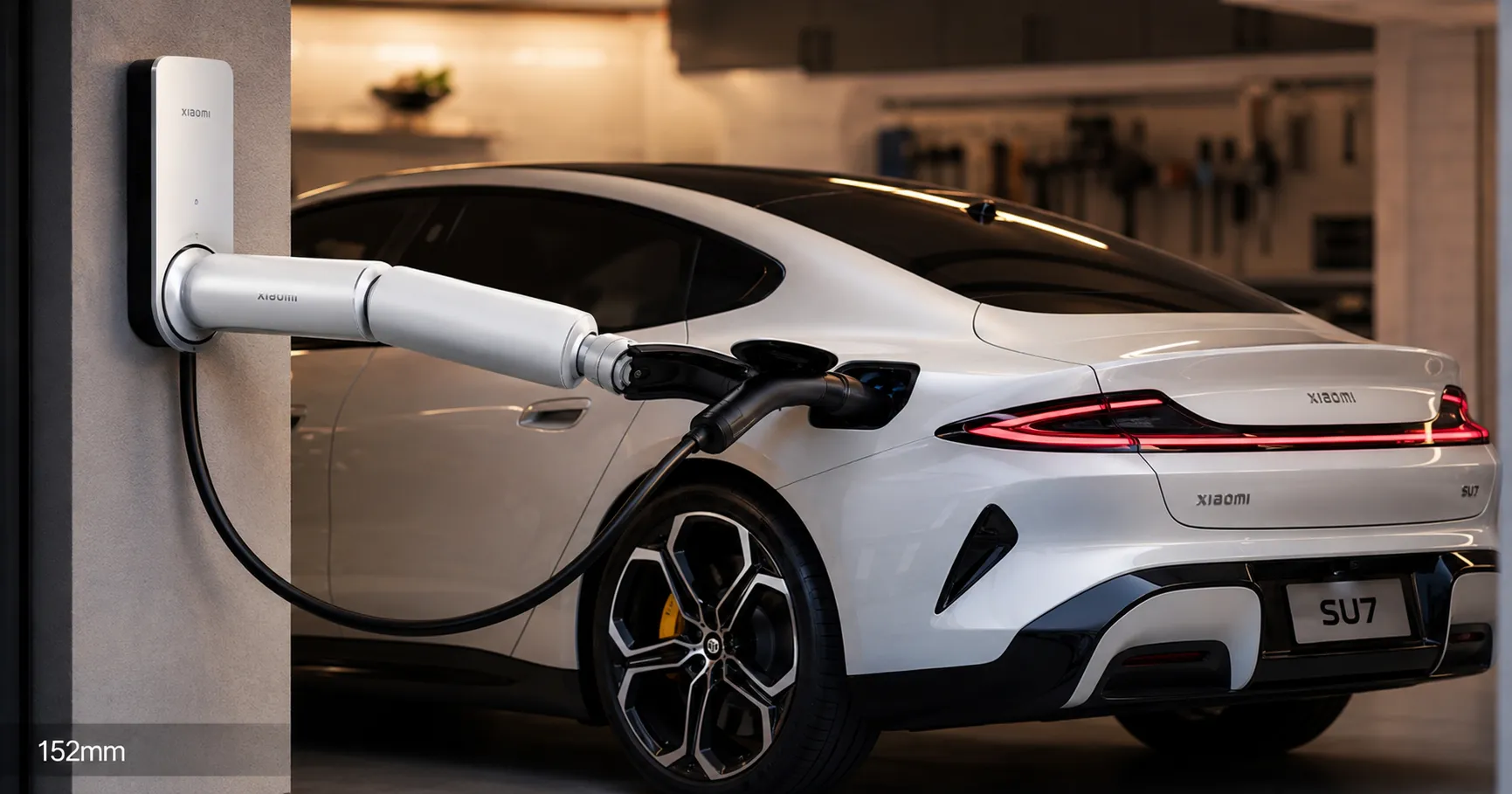
Xiaomi's new robotic arm delivers on a promise Tesla made in 2014. We compare the Xiaomi robot charger to Tesla's 'metal snake' to see if it's practical.
Key Takeaways
- Xiaomi is launching a robotic EV charger for home use in Q4 2026, delivering on a concept Tesla prototyped in 2015 but never released.
- The charger is a compact, AI-guided arm designed for Xiaomi's own EVs, reinforcing its smart home and vehicle ecosystem.
- While convenient, the system's practicality will depend on its unannounced price and whether consumers accept being locked into a single brand's ecosystem.
On this page
Xiaomi has unveiled a robotic charging arm for home garages, a product that automatically plugs in your electric vehicle. This move delivers on a concept Tesla first promised in 2014 but never brought to market, raising questions about whether automated charging is finally becoming a practical reality for consumers.
The system is designed for convenience, allowing an owner to park their EV and walk away while the robot handles the entire charging process. With a planned retail launch in China for Q4 2026, Xiaomi appears to be the first to bring this specific technology to a consumer-ready state.
What is the Xiaomi Robot Charger?
Xiaomi's device is a compact, wall-mounted robotic arm that extends to connect a charging cable to an EV's port. According to The Next Web, the unit has a body width of just 152mm, making it suitable for tight residential parking spaces. It uses AI-based vision recognition to achieve what Xiaomi calls sub-millimeter precision when plugging in.
The system is fully automated. It detects the vehicle's position, connects for charging, and then retracts the cable once the session is complete or a preset battery level is reached. TechRadar also notes that users can initiate charging remotely with a smartphone, provided the car is parked within the arm's range. The catch is that the device will only be compatible with Xiaomi's own electric vehicles, such as the SU7 and YU7.
How It Compares to Tesla's 'Metal Snake'
The idea of a robotic charger was popularized by Elon Musk, who tweeted in 2014 about a charger that connects "like a solid metal snake." While Tesla demonstrated a functional prototype in 2015, the product never shipped to customers. The company has since shifted its focus toward wireless charging solutions, acquiring startup Wiferion in 2023.
Xiaomi's approach differs significantly from Tesla's abandoned prototype, focusing on a more practical, production-ready design. Here is how they stack up based on available information.
| Feature | Xiaomi Robot Charger (2026) | Tesla 'Snake' Prototype (2015) |
|---|---|---|
| Status | Production-ready, Q4 2026 China launch | Prototype only, never shipped |
| Design | Compact, 152mm wide wall unit | Large, multi-segmented arm |
| Application | Residential home garages | Unspecified, likely home use |
| Compatibility | Xiaomi EVs only | Tesla Model S (in demo) |
| Company Focus | Part of an integrated smart home ecosystem | Pivoted to wireless charging |
Is Robotic Charging a Practical Solution?
The primary benefit of a robotic arm is eliminating the need to handle heavy, often dirty charging cables. This convenience is the main selling point. Xiaomi's system is designed to integrate with its autonomous parking technology, creating a seamless experience where the car parks and charges itself. This level of automation could be a key differentiator in a competitive EV market.
However, the practicality depends heavily on price, which Xiaomi has not yet announced. The technology is complex, and as TechRadar suggests, Tesla's version may have been abandoned for being too expensive. Furthermore, the solution creates ecosystem lock-in, a strategy that could deter buyers who don't want to commit exclusively to one brand. For a deeper look at how tech giants use this strategy, see how Apple's Siri strategy relies on its ecosystem to retain users.
Other companies are exploring similar technologies, indicating a broader industry trend. Huawei has shown a robotic arm, while Li Auto is developing a rail-based system for public stations. The key trade-off is between robotic arms that automate existing plugs and wireless pads, like Porsche's 11kW system, which eliminate cables entirely but require new vehicle hardware.
References:
- The Next Web, Xiaomi built a robotic arm that plugs in your EV at home, delivering on a promise Tesla made in 2014 and never kept. Accessed on Jun 16, 2026
- TechRadar, Xiaomi unveiled an EV feature that Tesla promised back in 2014… but it could make charging a lot easier. Accessed on Jun 16, 2026
About the author
The Mixstackrr Team is a group of writers and editors with more than 10 years of combined experience in SEO and consumer tech. We test devices, dig through settings, and turn everyday tech problems into clear, step-by-step guides anyone can follow.