MSI Claw 8 EX Outguns the Steam Deck, But Should You Switch?

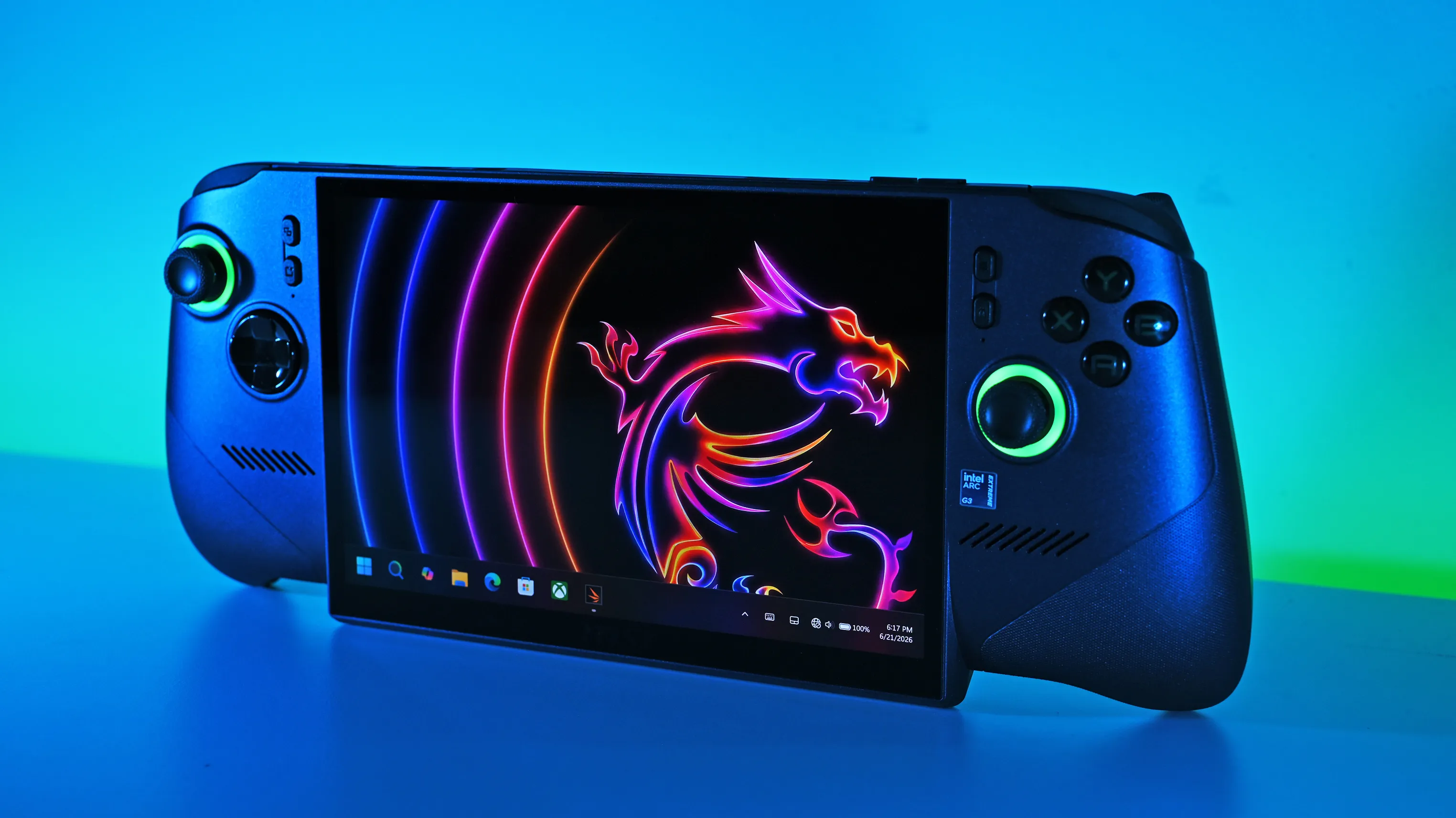
The MSI Claw 8 EX AI+ posts huge frame-rate gains over the Steam Deck OLED, yet its $1,800 price and Windows quirks complicate any upgrade.
Key Takeaways
- The Claw 8 EX AI+ posts 50 to 75 percent framerate gains over rivals and clearly outpaces the Steam Deck OLED in demanding titles.
- Its $1,800 price, near twice the OLED Steam Deck's $950, is the main reason reviewers hesitate to recommend it.
- Windows handheld software and launch-day missing controls remain the biggest drawbacks against SteamOS for everyday use.
The MSI Claw 8 EX AI+ landed Monday (June 23) as the first handheld built around Intel's new Arc G3 Extreme chip, and the early verdict is split. Reviewers agree the raw performance is a real leap. They are far less sure the price makes sense for anyone already holding a Steam Deck.
Engadget reports framerate increases of 50 to 75 percent, and sometimes more, against rivals like the ASUS ROG Xbox Ally X and Lenovo Legion Go 2. In Cyberpunk 2077 at 35 watts, the Claw hit 95 fps where those competitors managed 62 and 57 fps. The same chip stays efficient at low power. Engadget saw 59 fps in Returnal at just 17 watts, well ahead of both flagship rivals.
The Steam Deck comparison is where the picture gets more interesting. The Verge tested the Claw against a Steam Deck OLED on battery across several demanding titles. Final Fantasy VII Remake Intergrade hovered between 70 and 100 fps on the Claw after tweaks, while the Deck struggled to hold 60 fps.
According to The Verge, the visual gap was obvious without changing a single setting. Character models showed sharper edges and more detail, and busy firefights were easier to read. Clair Obscur Expedition 33 looked much crisper too, though it showed distracting glowy artifacts around objects in close-up shots.
Battery endurance roughly evens out despite the extra power draw. The Verge measured around 35 watts of drain on the Claw versus 22 to 23 watts on the Deck. The Claw's larger 80Whr battery offsets that, so both devices land near two hours in heavy games. On a light title like Balatro, both lasted a little over six hours, so the Claw offers no endurance edge there.
The hardware itself is clearly premium. Engadget notes an 8-inch IPS display at 1,920 x 1,200 with a 120Hz refresh rate, VRR and up to 500 nits. The Claw also adds Wi-Fi 7, Thunderbolt 4, Hall effect sticks and a fingerprint power button. MSI skipped an OLED panel, which keeps colors a step behind the Deck's screen.
Software is where both reviews push back hardest. The Claw ships with the fullscreen Xbox experience, which trims background processes and helps performance. Yet Engadget found users still juggling the MSI Center app, the Xbox layer and Steam at once, calling it three launchers just to reach your games.
The Verge framed the same friction more bluntly. Its reviewer described bouncing between Windows, Xbox Mode, MSI's software and Steam, and spent roughly 90 minutes on setup before installing Steam. That stands in sharp contrast to the straightforwardness of SteamOS on the Deck.
There are also missing controls at launch. Engadget reports the Endurance mode frame target, which offers 30, 40 or 60 fps options, currently requires opening Intel's graphics software. Intel says a Quick Settings tile is coming. Using frame generation while Endurance mode is on also will not be available at launch.
Then there is the price, the single factor both outlets keep returning to. Engadget puts the Claw 8 EX AI+ at $1,800, with no cheaper standard Arc G3 model planned. The Verge cites a figure near $1,799 and argues handhelds at this cost now compete with a new laptop rather than complement one.
For context on value math in this category, our breakdown of the Steam Machine price versus a DIY build shows how quickly premium gaming hardware can stop making financial sense. The Claw faces a similar scrutiny.
One practical advantage still favors Windows handhelds. The Verge notes the Claw can run multiplayer games like Fortnite that the Linux-based Deck cannot, because of anti-cheat software. That flexibility, paired with the performance jump, could be the tipping point for a buyer choosing fresh between the two.
For existing Deck owners, the answer leans the other way. The Verge reviewer, a daily Deck OLED user, was not convinced the extra power justified switching, citing comfort and the unfinished software. With the OLED Steam Deck now around $950, the Claw asks roughly twice as much for gains many players may not feel daily.
References:
- The Verge, I’m not giving up my Steam Deck for MSI’s new Claw. Accessed on Jun 23, 2026
- Engadget, MSI Claw 8 EX AI+ review: Big money for big performance. Accessed on Jun 23, 2026
About the author
The Mixstackrr Team is a group of writers and editors with more than 10 years of combined experience in SEO and consumer tech. We test devices, dig through settings, and turn everyday tech problems into clear, step-by-step guides anyone can follow.