
Meta Hits Pause on Worker Tracking After Its Own Data Leaks

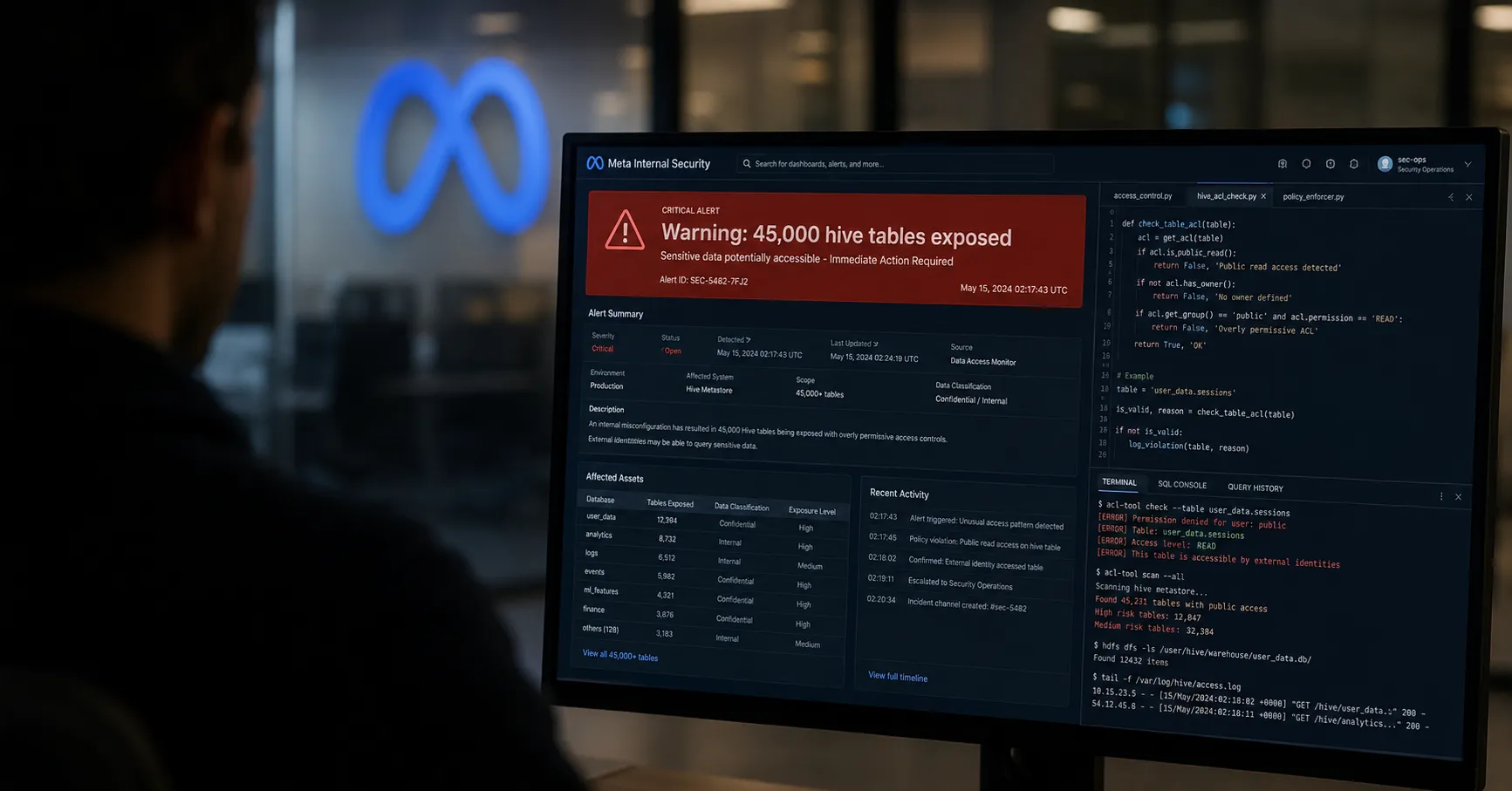
Meta paused its keystroke-tracking AI program after a misconfigured database exposed worker data internally. A pause is not the same as an end.
Key Takeaways
- Meta paused MCI because of an internal data exposure, not because of worker protest or privacy law concerns.
- The leaked tables included keystrokes, transcriptions, private conversations, and performance data, revealing the program's true scope.
- A pause framed as temporary and investigation-driven points to a quieter relaunch, not a cancellation.
Meta has paused a controversial program that tracked its own employees' keystrokes, mouse movements, and screen content. The trigger was not the months of worker protest. It was an internal security failure that exposed the very data the program collected.
According to a report from Wired, an internal security notice on Monday (June 22) said data from the program had been left accessible to anyone inside the company. The notice referenced "employee data across 45,000 hive tables."
The program is the Model Capability Initiative, or MCI. Wired reports it was rolled out to US employees in April to gather human examples for training AI to operate computer software.
What the lapse exposed says more than any policy memo. According to documents viewed by Wired, the affected tables included full prompts and transcriptions, private conversations, and people and performance data. That is the surveillance program described by its own output.
Meta's official line frames the pause as caution, not retreat. A company spokesperson told both Wired and Engadget that there was no indication data was improperly accessed, and that the program is paused while the company investigates.
The cause appears to be a basic configuration error. According to an internal post seen by Wired, chief technology officer Andrew Bosworth said the implementation fell short of the program's own privacy review, citing "misconfigured ACLs," or access control lists.
That detail matters because Meta had repeatedly promised the opposite. Wired reports that Bosworth previously told concerned staff the program was "tightly controlled" and used the same protections as other sensitive datasets.
Worker resistance had been building for weeks before the leak. Wired reports that more than 1,600 employees signed an internal petition last month warning the data collection introduced security and regulatory risk, including the potential for breaches.
The episode also fits a wider pattern of internal friction at large tech firms over how they treat their own staff. Mixstackrr previously covered how Amazon probed its own engineers over data center testimony, a different dispute but the same underlying tension between leadership and workers.
For readers, the more useful question is whether "pause" means "end." The language from Meta suggests it does not, since the company frames the stop as temporary and tied to an investigation.
There is also a regulatory backdrop. According to Wired, Meta operates under a US Federal Trade Commission consent decree, in effect until 2040, that requires it to maintain processes to prevent breaches.
This was not an isolated incident either. Engadget notes it follows other recent AI-related security problems at Meta, including an exploited AI customer service chatbot earlier this month.
Workplace monitoring is no longer a fringe concern, and the friction is spreading to consumer products too, as seen in LinkedIn's new app tracking. The Meta case shows what happens when that data is collected at scale and then mishandled.
The likely path forward is a quieter relaunch with tighter access controls, not a cancellation. The training need that justified MCI has not gone away, and Wired reports that some employees are still demanding the tracking stop entirely.
References:
- Engadget, Meta is 'pausing' employee tracking program after it let the whole company see sensitive data. Accessed on Jun 23, 2026
- Wired, Meta Pauses Employee-Tracking Program Following Internal Data Leak. Accessed on Jun 23, 2026
- Wired, Meta Exposed Data Internally From Its Controversial Employee-Tracking Program. Accessed on Jun 23, 2026
About the author
The Mixstackrr Team is a group of writers and editors with more than 10 years of combined experience in SEO and consumer tech. We test devices, dig through settings, and turn everyday tech problems into clear, step-by-step guides anyone can follow.