Fox's Roku Deal Will Change How You Watch TV

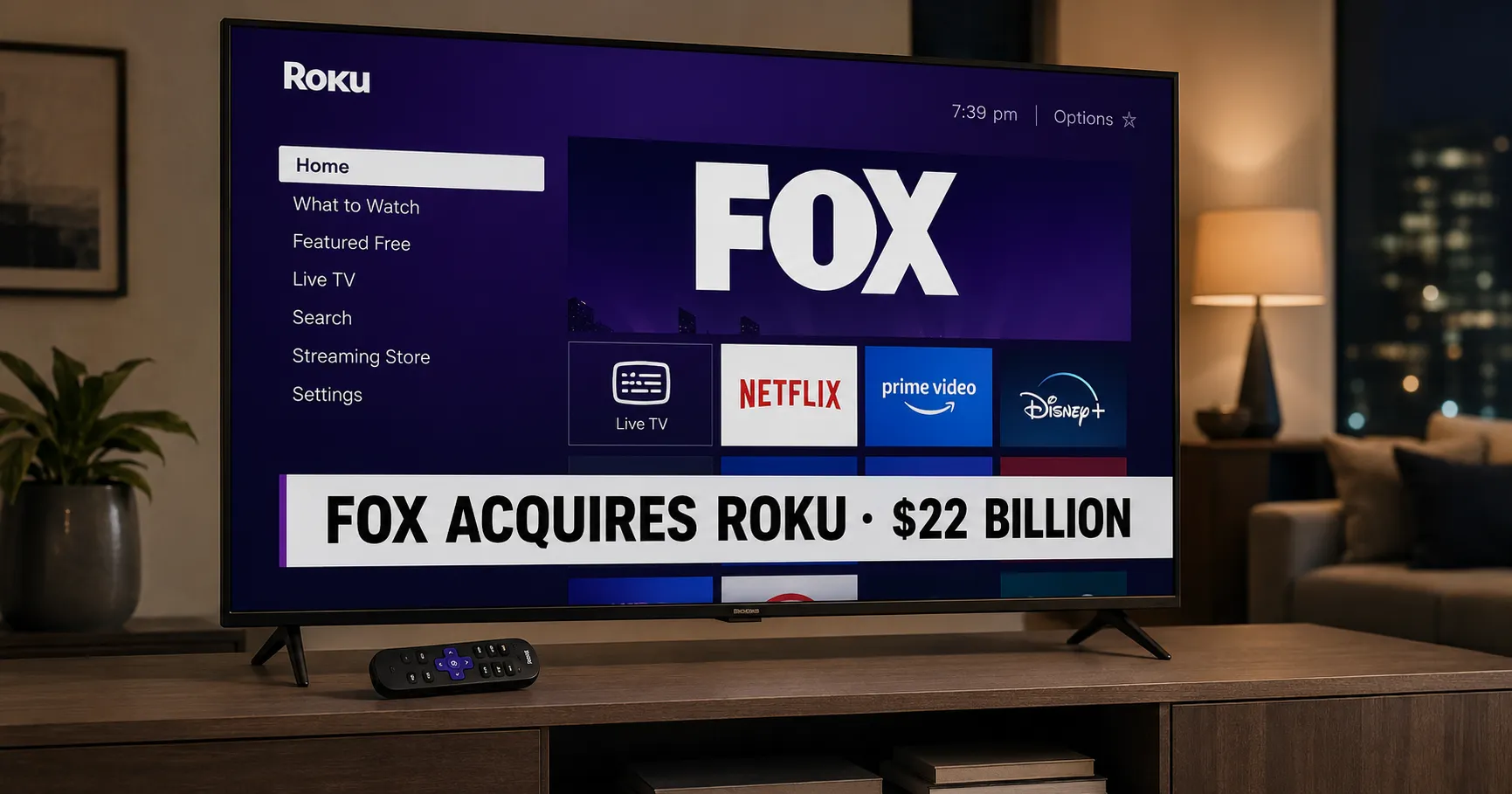
Fox is buying Roku for $22 billion, creating a streaming and advertising giant. Here's how the deal will impact your access to live sports and free TV.
Key Takeaways
- A new ad giant is born: The merger combines Fox's content with Roku's 100 million households to create a powerful advertising platform.
- Platform neutrality is at risk: While promising to stay open, Roku's ownership by a major content provider raises questions about fair competition.
- Free streaming gets a boost: The combination of Tubi and The Roku Channel could create a dominant force in free, ad-supported TV.
Fox announced on Monday (June 15) that it will acquire Roku in a deal valued at approximately $22 billion, setting the stage for a new streaming and advertising powerhouse.
The move combines one of the largest media companies with the most popular streaming platform in the United States. For cord-cutters, this merger will directly reshape the living room experience, from how you watch live sports to the ads you see during movies.
According to a joint press release, the transaction is expected to close in the first half of 2027.
The deal unites Fox's valuable content library with Roku's massive user base. Fox brings its leading sports and news channels, along with the free ad-supported streaming service Tubi. Roku contributes its hardware, operating system, and a direct data relationship with over 100 million households.
Fox CEO Lachlan Murdoch called the acquisition a “defining” moment for the company. In a statement, he said the deal combines the “most valuable live content portfolio” with the “preeminent streaming platform.”
A core driver of the acquisition is advertising. By merging Fox's content with Roku's platform data, the new company can more effectively target ads to viewers. This gives Fox a powerful new revenue stream and reduces its reliance on traditional cable delivery, as reported by TechCrunch.
This new entity is poised to become the third-largest television company in the U.S. by viewership, according to Fox.
For viewers, the most immediate question is platform neutrality. Fox and Roku have committed to keeping Roku an “open, partner-friendly platform.” However, the deal places a major content owner in control of a platform that hosts apps from its direct competitors.
This overlap could attract regulatory scrutiny. According to CNET, questions may be raised to ensure Roku does not unfairly favor Fox-owned content over rival services.
The deal also gives Fox a direct pipeline to viewers for its live sports content, a major draw for audiences trying to figure out the cheapest way to stream every 2026 World Cup match.
On the other hand, the merger could significantly strengthen free streaming options. The combination of Fox's Tubi and The Roku Channel creates a formidable competitor in the free, ad-supported streaming television (FAST) market.
This could mean more free movies, shows, and live channels for users willing to watch ads.
Roku founder and CEO Anthony Wood stated the deal is an “extraordinary opportunity to accelerate our vision, scale faster and innovate more aggressively.”
Ultimately, the Fox-Roku merger signals a major consolidation in the streaming wars. While it promises a more integrated content and advertising experience, cord-cutters will be watching to see if the open platform they rely on remains truly open.
References:
- CNET, Fox to Buy Roku for $22B, Creating a Streaming Powerhouse. Accessed on Jun 15, 2026
- TechCrunch, Fox to acquire Roku in $22 billion deal. Accessed on Jun 15, 2026
- 9to5Google, Roku is being bought out by Fox for $22 billion. Accessed on Jun 15, 2026
About the author
The Mixstackrr Team is a group of writers and editors with more than 10 years of combined experience in SEO and consumer tech. We test devices, dig through settings, and turn everyday tech problems into clear, step-by-step guides anyone can follow.