
Tesla Faces Federal Probe That Could Box In Its Driver Assist

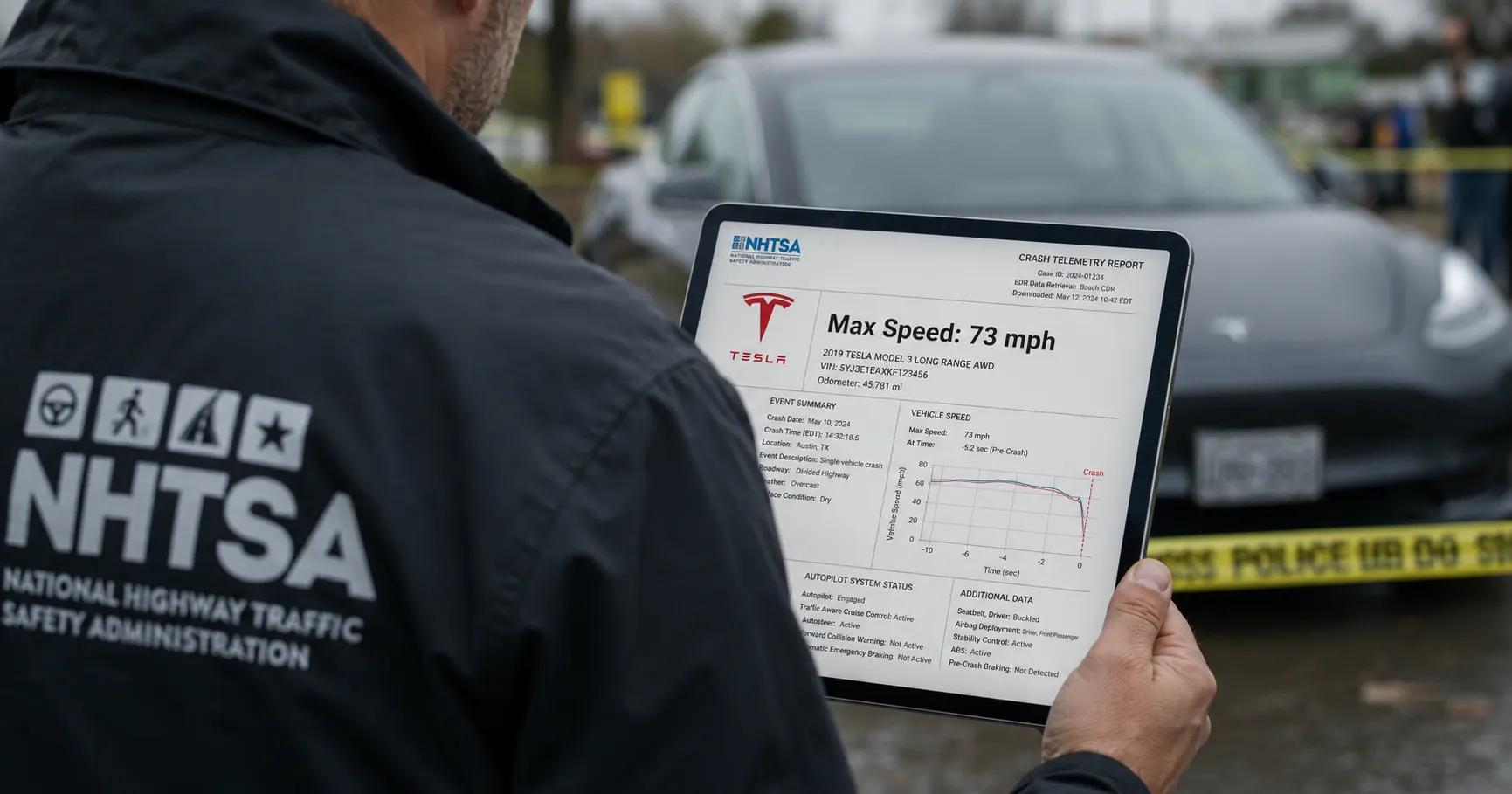
A fatal Model 3 crash in Texas just triggered a federal NHTSA probe that could finally pressure limits on Tesla's driver-assist systems.
Key Takeaways
- A federal NHTSA special crash investigation adds direct regulatory pressure that could push toward limits on Tesla's driver-assist systems.
- Conflicting accounts and Tesla's history of withholding crash data make data access central to any accountability outcome.
- More than three dozen Tesla driver-assist probes since 2016 suggest a pattern regulators may no longer treat as isolated.
A fatal crash in Texas has pulled Tesla's driver-assist systems back under federal scrutiny, and this time the pressure could stick. The case puts the question of accountability, not just technology, at the center.
The National Highway Traffic Safety Administration said on Monday that it opened a special crash investigation into the incident. According to a report from CNBC, a Tesla Model 3 slammed into a home in Katy, Texas, killing 76-year-old Martha Avila.
CNBC reported that the crash happened on June 19 in a Houston suburb. Harris County authorities said the driver, Michael Butler, was cooperating at the scene.
Authorities said Butler had been using Tesla's partially automated driving systems when the car left its lane. According to a report from Mashable, the driver showed no signs of drug or alcohol impairment.
Tesla pushed back hard. CNBC reported that CEO Elon Musk wrote on X that the crash "makes no sense," arguing the system drives slowly through neighborhood streets.
Tesla's autopilot vice president, Ashok Elluswamy, went further. He claimed on X that the driver pressed the accelerator to 100% and reached 73 mph, with the pedal still down after impact.
Those claims remain under investigation. CNBC noted that the driver's account and the executives' statements have not been independently verified.
This is the part that matters for any future limits. The Washington Post previously reported that Tesla has a history of withholding or making it hard to obtain the electronic data its cars store after severe collisions, CNBC said.
The pattern is not isolated. CNBC reported that NHTSA has opened more than three dozen Tesla special crash investigations tied to its driver-assist systems since 2016.
The branding fight is also unresolved. CNBC reported that Tesla dropped the "Autopilot" name in the US in February, after the California DMV and a court found the company had engaged in false advertising.
Tracking groups put the human cost in sharper terms. CNBC cited TeslaDeaths.com, which counts at least 65 fatalities from 2013 to 2025 in crashes where Autopilot or FSD was mentioned as a factor.
Regulators are not focused on Tesla alone. The wider robotaxi industry faces its own reckoning, as our coverage of the Waymo recall and robotaxi safety shows.
Owners of other automated vehicles are watching liability questions too. The legal exposure echoes our breakdown of the Rivian self-driving lawsuit and what owners can do.
The stakes are not theoretical for the company. CNBC reported that the probe lands as Musk works to keep investor faith that Tesla can lead in autonomous driving.
For now the market shrugged. CNBC reported that Tesla shares closed up a point on Monday at $405.05 despite the federal probe news.
References:
- Mashable Tech, Autopiloted Tesla reportedly involved in Texas crash that killed a woman. Accessed on Jun 23, 2026
- CNBC Tech, Tesla faces federal probe after Model 3 slams into Texas home, killing 76-year-old. Accessed on Jun 23, 2026
About the author
The Mixstackrr Team is a group of writers and editors with more than 10 years of combined experience in SEO and consumer tech. We test devices, dig through settings, and turn everyday tech problems into clear, step-by-step guides anyone can follow.