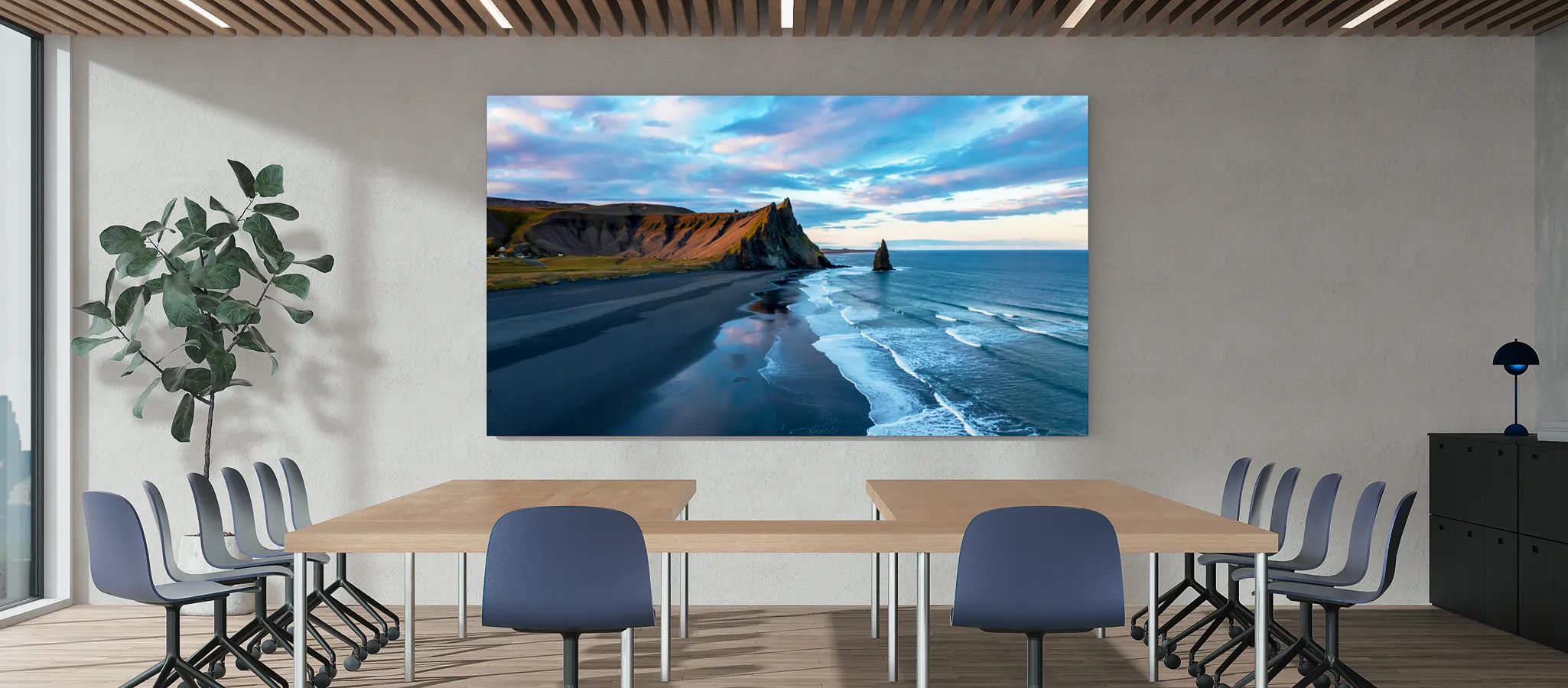
Sony Crystal LED UNIFY: Specs, Price, Worth It?

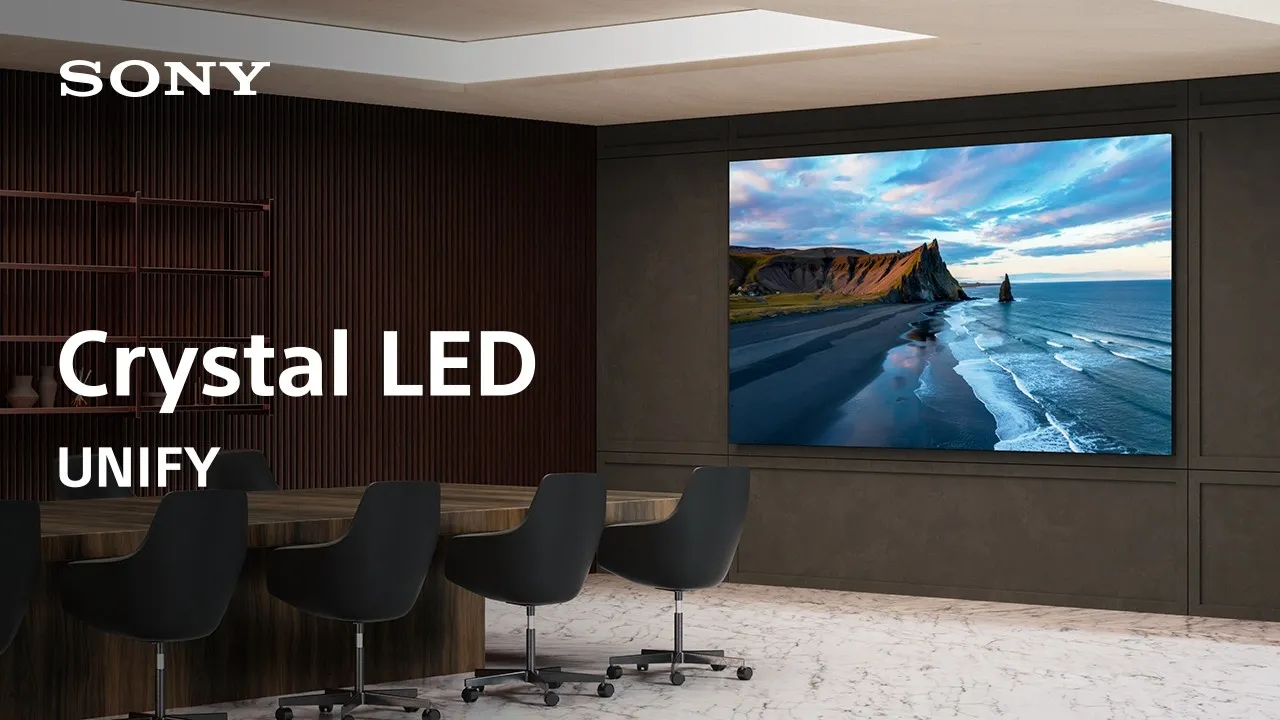
Sony Crystal LED UNIFY is a 135-inch all-in-one dvLED you can install in an hour. Here are the specs, the likely price, and who this boardroom display is for.
Key Takeaways
- The Sony Crystal LED UNIFY (ZRL-135SG) is a 135-inch all-in-one dvLED that two people can install in about an hour with no electrical work.
- Sony has not announced a price but positions it below the Crystal LED S Series, which starts at roughly $220,000.
- Specs are Full HD, 1.5mm pixel pitch, 800 cd/m² brightness, and sub-100mm depth, with availability in early 2027.
On this page
Can a 135-inch direct-view LED display really go up in about an hour, by just two people, with no electrical work?
That is the core promise of the Sony Crystal LED UNIFY, and it reframes a display class that used to demand specialist installers and six-figure budgets.
Is the Sony Crystal LED UNIFY worth it?
The Sony Crystal LED UNIFY is worth it for organizations that want a seamless 135-inch dvLED display without the cost, custom engineering, and integrator fees of a modular LED video wall.
Sony Electronics announced the Crystal LED UNIFY, model ZRL-135SG, as its first all-in-one direct-view LED display aimed at corporate boardrooms and university lecture halls.
The pitch is simplicity, because it ships as five pre-assembled display units plus a control unit that two people can install in approximately one hour with no electrical work required.
That matters because modular Crystal LED installations can cost upward of $200,000 before installation, and those installation fees typically add another $25,000 to $50,000 on top, according to our report on Sony bringing 135-inch dvLED to boardrooms.
If you do not need a fully custom wall and you mainly want a big, seamless screen that an internal team can mount, the UNIFY removes most of the friction that has kept dvLED out of ordinary meeting rooms.
Sony Crystal LED UNIFY specs at a glance
The Crystal LED UNIFY is a Full HD, 135-inch all-in-one dvLED display built for large, brightly lit rooms rather than close-up desk work.
Here is how the confirmed specifications break down.
| Spec | Sony Crystal LED UNIFY (ZRL-135SG) |
|---|---|
| Display size | 135 inches, all-in-one dvLED |
| Resolution | Full HD (4K input supported via control unit) |
| Pixel pitch | 1.5mm |
| Max brightness | 800 cd/m² |
| Surface tech | Anti-Reflection Surface Technology |
| Depth on wall | Under 100mm (less than four inches) |
| Install | Five pre-assembled units plus control unit, ~1 hour, two people |
| Availability | Early 2027 |
The 800 cd/m² brightness paired with Sony's Anti-Reflection Surface Technology is meant to keep the image visible in rooms with large windows where projectors often wash out.
The display sits less than 100mm from the wall once mounted, which Sony says meets Americans with Disabilities Act protrusion requirements.
A slide-out, front-serviceable design is built in so maintenance does not require pulling the whole display off the wall.
How much does the Sony Crystal LED UNIFY cost?
Sony has not disclosed pricing for the Crystal LED UNIFY, but it positions the display as a cost-effective alternative below its existing Crystal LED S Series.
For context, that S Series starts at roughly $220,000, so the UNIFY is expected to land beneath that figure.
What is easy to miss here is that simplified installation is part of the value, because skipping integrator fees of $25,000 to $50,000 changes the all-in math even before the panel price.
Sony is not chasing the bottom of the market.
Hisense prices its 136-inch 136MX at $100,000, roughly 60% to 70% below Samsung and LG equivalents, while LG's 136-inch MAGNIT Active sells for around $300,000.
Sony's bet is that easier installation and integration with its existing professional displays will matter more to corporate buyers than undercutting Chinese manufacturers on sticker price.
How the UNIFY fits Sony's professional display lineup
The Crystal LED UNIFY uses the same device management platform and remote interface as Sony's BRAVIA professional displays.
That means an IT team already running Pro BRAVIA screens in smaller meeting rooms can manage the UNIFY from the same system instead of learning a new ecosystem.
It sits alongside the Crystal LED S Series, which uses the same Anti-Reflection Surface Technology and 800 cd/m² brightness in a modular format with finer pixel pitches of 1.25mm and 1.56mm.
Together the two lines let Sony cover corporate displays from all-in-one installs up to fully custom video walls, and you can browse more big-screen coverage on our TVs hub.
"Expanding our portfolio to include a 135-inch all-in-one model helps us meet customer demand, makes our solutions easier to spec and deploy," Rich Ventura, Vice President of Professional Display Solutions at Sony Electronics, said in a statement.
Who should buy it, and the one trade-off to weigh
The UNIFY is built for boardrooms, meeting rooms, community spaces, and higher education environments rather than home theaters.
The clearest trade-off is resolution, because Full HD across a 135-inch panel gives a relatively low pixel density meant for viewing from several meters, not for reading fine detail up close.
The display accepts 4K input through its control unit, but that does not change the native Full HD panel resolution.
In practice, a buyer comparing the UNIFY to a high-end 98-inch LCD will weigh that carefully, since a 98-inch panel can deliver native 4K at a fraction of the cost.
The UNIFY's advantage is size and seamlessness, not pixel density, so it suits rooms where a single large, bezel-free image beats sharpness at a desk.
The announcement lands in a dvLED market growing roughly 14.7% year over year in the corporate AV segment in 2026, with dvLED prices down 40% to 50% over the past three years, as reported by The Next Web.
Sony plans to show the Crystal LED UNIFY at booth C8301 at InfoComm in Las Vegas from June 17 to 19, with availability expected in early 2027.
Frequently asked questions
When will the Sony Crystal LED UNIFY be available?
Sony expects the Crystal LED UNIFY to be available in early 2027, with an early showcase at InfoComm 2026 in Las Vegas from June 17 to 19.
How much does the Sony Crystal LED UNIFY cost?
Sony has not disclosed pricing, but describes it as a cost-effective option positioned below its Crystal LED S Series, which starts at roughly $220,000.
Is the Crystal LED UNIFY 4K?
No. The panel is native Full HD at 135 inches. It supports 4K input through its control unit, but that does not change the native panel resolution.
About the author
The Mixstackrr Team is a group of writers and editors with more than 10 years of combined experience in SEO and consumer tech. We test devices, dig through settings, and turn everyday tech problems into clear, step-by-step guides anyone can follow.