Apple's Siri Strategy: Why It Leans on Google AI

Apple's Siri strategy now runs on Google's Gemini and hides a third-party AI framework. Here is why Apple is hedging and whether to trust the new Siri.
Key Takeaways
- Siri AI runs on a custom 1.2-trillion-parameter Google Gemini model in Google Cloud under a deal worth about $1 billion per year, confirmed across all three sources.
- iOS 27 beta hides an Extensions framework to swap between ChatGPT, Claude, and Gemini inside Siri, but Apple kept it off the WWDC stage and toggled off on the backend.
- Apple's silence ties to three pressures (EU DMA negotiations, an OpenAI legal threat, and protecting the Siri relaunch message), while Gurman's review rates Siri AI roughly six months behind leading chatbots.
On this page
Apple's Siri strategy after WWDC 2026 is built on a hedge: the rebuilt assistant runs on Google's AI, and Apple has already coded support for swapping in rival models without saying so on stage.
That tension, between owning the assistant and quietly renting the intelligence behind it, is the real story for anyone deciding whether the new Siri is worth bothering with.
What Apple's Siri strategy actually is now
Apple's Siri strategy is to own the interface while leasing the model. Siri AI is powered by Google's Gemini, a point all three reports here agree on, with Apple confirming the Google partnership directly, according to BGR.
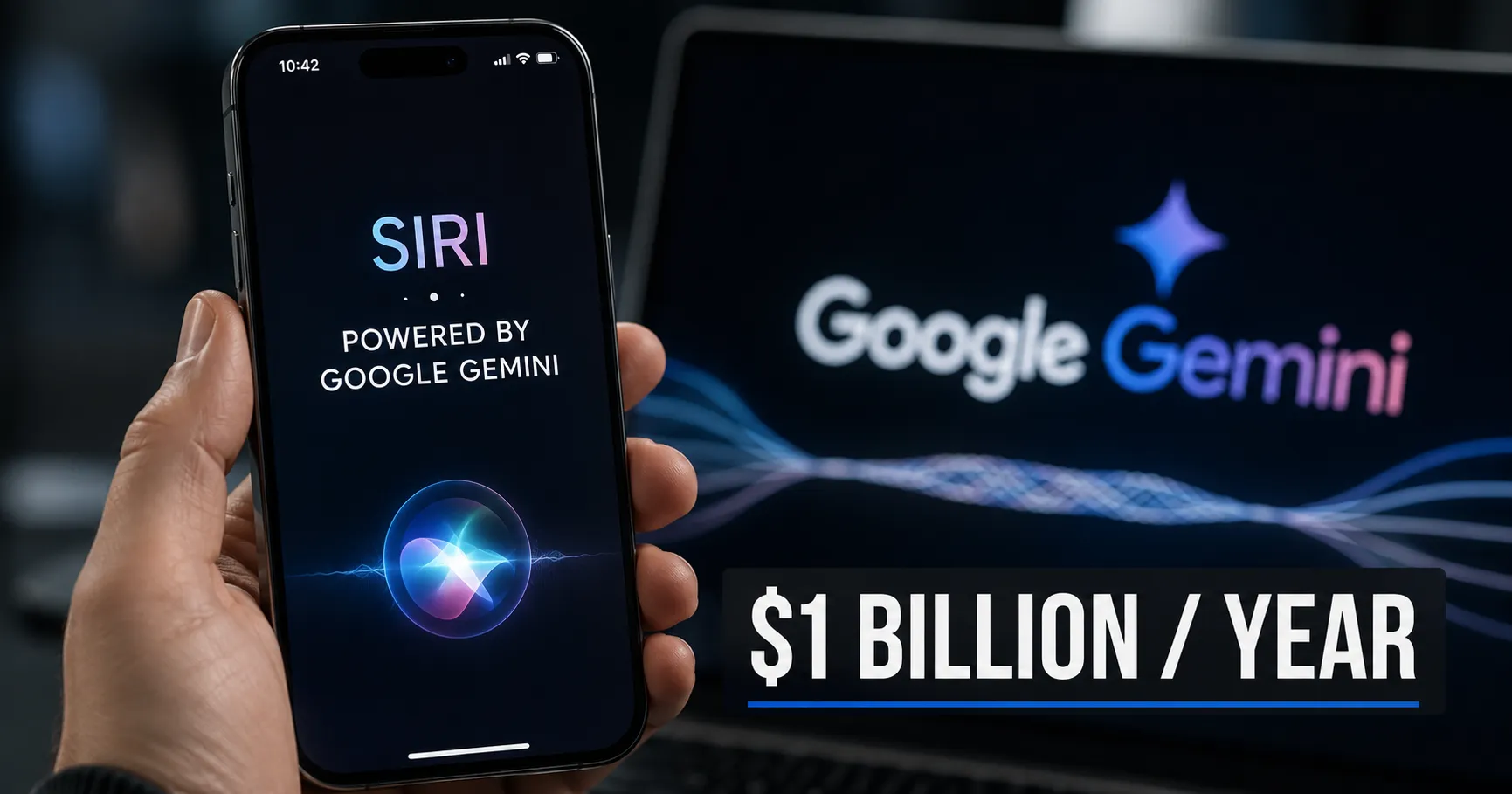
The technical detail is more specific than a generic licensing line. Per The Next Web, Siri AI uses a custom 1.2-trillion-parameter Gemini model running on Nvidia Blackwell GPUs in Google Cloud, under a deal worth roughly $1 billion per year.
So the assistant you talk to is Apple's, but the reasoning is Google's, and Apple is paying about $1 billion annually for that arrangement. The catch is that this dependency is the foundation, not a temporary stopgap, which is why the next layer of the strategy matters so much.
The hidden framework Apple refused to demo
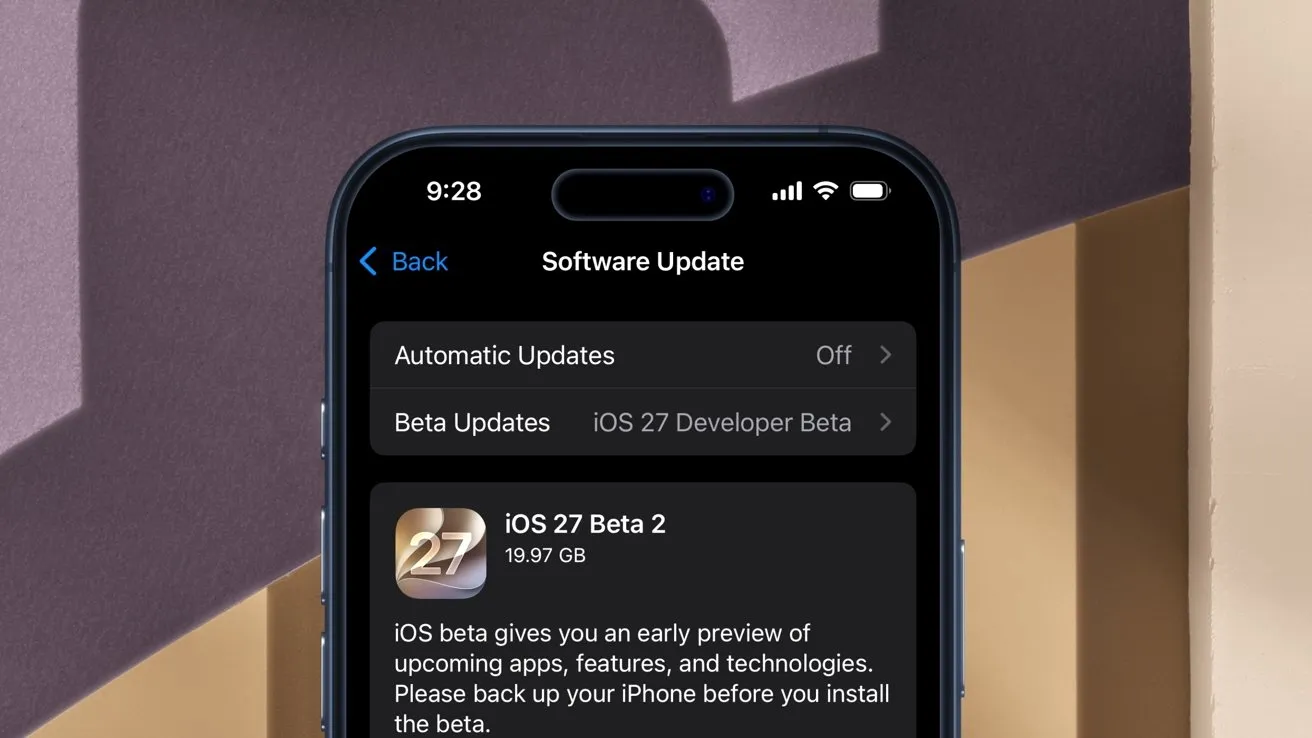
Apple built a third-party AI system for Siri and then left it out of the keynote entirely. The iOS 27 developer beta contains an Extensions framework that would let iPhone users swap between ChatGPT, Anthropic's Claude, and Google's Gemini directly inside Siri, but the feature was toggled off on Apple's backend and never appeared in any slide, demo, or press release.
Two of the three sources converge on this point with different framing. Digital Trends describes backend controls in the first iOS 27 beta for enabling or disabling support for AI models beyond ChatGPT, plus an App Store section for compatible AI apps. The Next Web reports the same Extensions system and adds that Apple has held discussions with OpenAI, Anthropic, and Google about granting the entitlements developers would need.
Where the sources differ is emphasis, not substance. Digital Trends frames the omission as something that may still arrive with iOS 27, while The Next Web treats it as a deliberate, pressure-driven choice to stay silent. Both agree the architecture is built and only the switch is unflipped.
Why Apple stayed quiet: three pressures
Apple's silence at WWDC traces to three overlapping pressures, and the two sources that explain the reasoning agree on all three.
- Regulatory: Apple confirmed Siri AI will not launch in the European Union, citing unresolved Digital Markets Act negotiations. The EU rejected Apple's proposed Trusted System Agent for rival assistants, so announcing a framework that invites third-party AI in would have contradicted Apple's own argument to regulators that such access is risky.
- Legal: OpenAI is preparing possible legal action over the June 2024 ChatGPT partnership, with lawyers weighing a breach-of-contract notice, according to Bloomberg as cited by The Next Web. Extensions would demote ChatGPT from exclusivity to one option among several, escalating that fight.
- Messaging: Apple spent two years rebuilding Siri and scrapped an earlier working version that did not meet its vision. Introducing a model-picker at launch would have undercut the message that Apple's own AI had finally arrived.
The trade-off here is clear: each reason that kept Extensions off stage also delays a feature that would make Siri more useful. Apple chose narrative control over feature breadth, at least for now.
Should you trust or bother with the new Siri?
The honest answer is to temper expectations, because the hands-on evidence is mixed. Bloomberg's Mark Gurman, in a review cited by The Next Web, described Siri AI as functional but buggy, with slow responses, cancelled queries, and misunderstood requests.
His benchmark is the part worth weighing. Gurman assessed Siri AI as roughly competitive with where leading chatbots were about six months ago, and noted it still cannot handle advanced workloads like research, programming, or data analysis. Apple is rolling out access through a waitlist, and even the public beta in July will be limited.
BGR pushes the harder line, arguing there is simply no need for Siri anymore now that Gemini, ChatGPT, and Copilot run on any phone and Apple CarPlay already supports third-party chatbots including Claude, ChatGPT, and Gemini. That view treats the Google partnership as proof the standalone assistant is redundant.
The strategy view points the other way. If you want a verdict on the product itself, our breakdown of whether the Gemini-powered Siri is worth it covers the user experience; the business logic suggests Siri is being rebuilt as a gateway rather than a single tool. What is easy to miss is that the same architecture Apple hid is what could eventually let you route a coding question to Claude and a chat to ChatGPT, all from inside Siri.
What the hedge means for everyday users
The practical takeaway is that the new Siri is a starting point, not a finished assistant. The reach is real, with Extensions positioned to give Claude and Gemini native access to more than 1.5 billion active Apple devices without a separate download, per The Next Web.
The condition attached to that promise is timing. Apple has not confirmed whether Extensions will ship with iOS 27 this fall, and the regulatory, legal, and messaging obstacles are all in motion at once. Until the switch flips, you are using a Google-powered assistant that Apple branded as its own, with the more flexible version still waiting behind a toggle.
References:
- BGR, Why There's Simply No Need For Siri Anymore. Accessed on Jun 15, 2026
- Digital Trends, Apple skipped Siri AI model choices at WWDC, but they may still arrive with iOS 27. Accessed on Jun 15, 2026
- The Next Web, Why Apple built a third-party AI system for Siri and then refused to show it at WWDC. Accessed on Jun 15, 2026
Frequently asked questions
Does the new Siri use Google's AI?
Yes. Siri AI is powered by a custom 1.2-trillion-parameter Google Gemini model running on Nvidia Blackwell GPUs in Google Cloud, under a partnership reported to be worth roughly $1 billion per year.
Can you choose a different AI model in Siri?
Not yet publicly. The iOS 27 beta contains an Extensions framework to switch between ChatGPT, Claude, and Gemini inside Siri, but Apple has left it toggled off and unannounced, with no confirmed ship date.
Is the new Siri AI good enough to rely on?
It is early. Bloomberg's Mark Gurman found it functional but buggy and roughly six months behind leading chatbots, unable to handle research, programming, or data analysis, with access limited to a waitlist and a restricted July beta.
About the author
The Mixstackrr Team is a group of writers and editors with more than 10 years of combined experience in SEO and consumer tech. We test devices, dig through settings, and turn everyday tech problems into clear, step-by-step guides anyone can follow.