Sign in with Apple vs Hide My Email: What's Different?

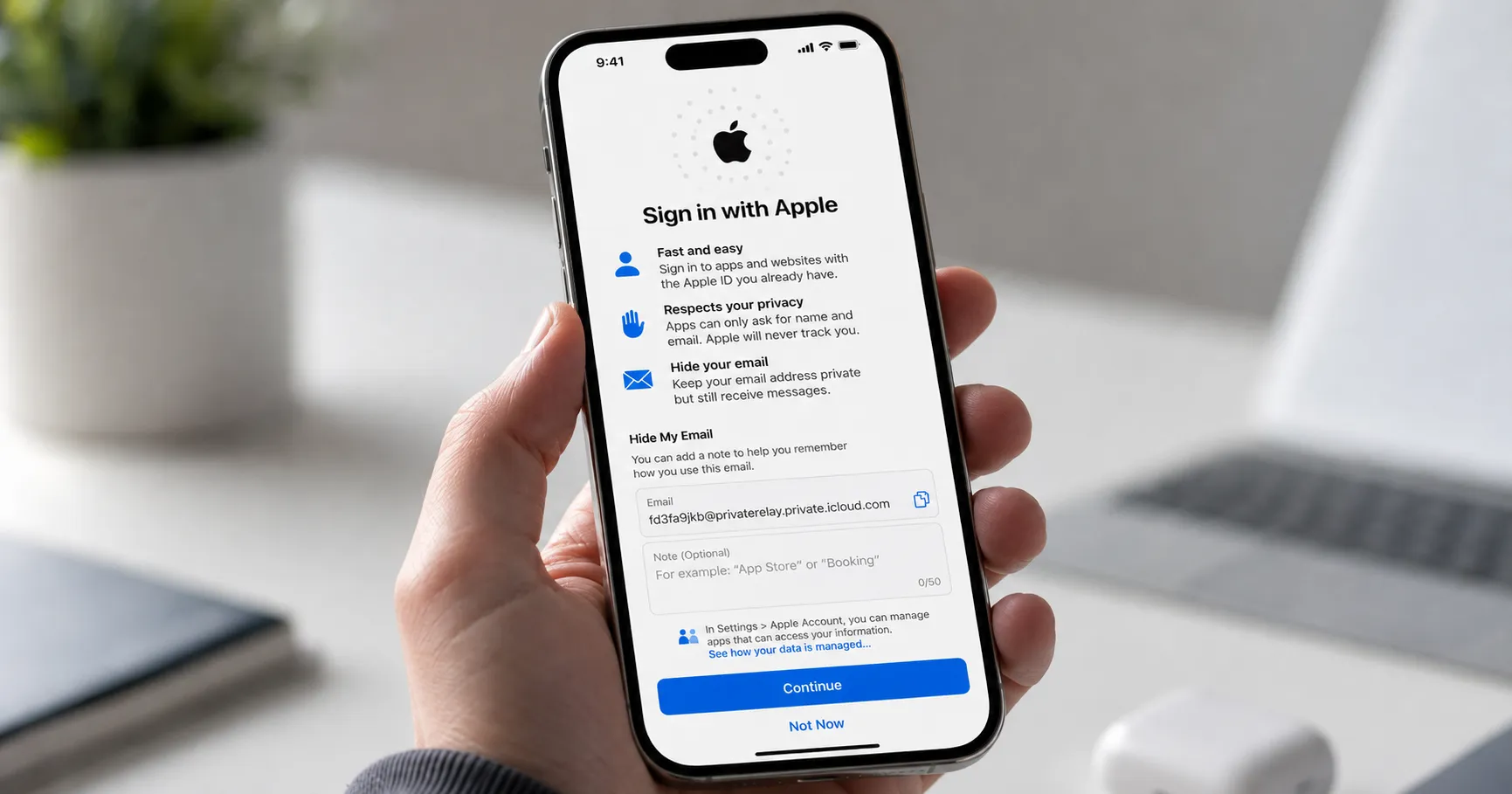
Apple is unifying Sign in with Apple and Hide My Email under a single domain. Find out what the new private.icloud.com domain means for you.
Key Takeaways
- Apple is moving both Sign in with Apple and Hide My Email to a single new domain: private.icloud.com.
- The change has minimal impact on regular users, as old email addresses will continue to work.
- Developers must update their systems to accept the new domain to avoid service interruptions.
On this page
Sign in with Apple and Hide My Email are two of Apple's core privacy features, designed to protect your real email address from apps and services. While they serve different functions, Apple is making a technical change that will soon unify them under one roof.
Later this summer, both services will begin using a single, shared domain for all newly generated private email addresses.
One New Domain for Both Privacy Tools
Apple announced it will consolidate the domains for both Sign in with Apple and iCloud+ Hide My Email. According to reports from both 9to5Mac and MacRumors, all new private addresses will be issued from private.icloud.com. This move streamlines the backend for these two distinct privacy services.
The key change is the source domain for the randomly generated email addresses. Previously, each service used a separate domain, which could cause confusion for developers trying to support both systems.
| Feature | Old Domain | New Domain (Summer 2026) |
|---|---|---|
| Sign in with Apple | privaterelay.appleid.com | private.icloud.com |
| Hide My Email (iCloud+) | icloud.com | private.icloud.com |
How This Change Affects You (and Who It Doesn't)
For most users, this change will be completely invisible. Apple confirmed that all existing addresses created on the legacy domains will continue to work and forward mail to you without any interruption. You do not need to take any action.
The primary impact is on developers and email service providers. Developers must ensure their account systems, email validation logic, and allowlists are updated to accept addresses from the new private.icloud.com domain. The catch is that failing to do so could prevent new users from signing up for their service with an Apple ID. This is one of many backend changes developers are navigating with Apple's latest software updates like iOS 27.
When Does This Take Effect?
Apple has not provided a specific date for the switch. The company's announcement on its developer blog only stated that the new unified domain will roll out "later this summer."
This means the transition could happen anytime in the coming months. Service providers are advised to update their systems proactively to prevent any issues once the change goes live.
References:
- 9to5Mac, Sign in with Apple and Hide My Email are getting a new shared email domain. Accessed on Jun 16, 2026
- MacRumors, Apple to Unify Sign in With Apple and Hide My Email on One Domain. Accessed on Jun 16, 2026
About the author
The Mixstackrr Team is a group of writers and editors with more than 10 years of combined experience in SEO and consumer tech. We test devices, dig through settings, and turn everyday tech problems into clear, step-by-step guides anyone can follow.