
6G Explained: What IMEC's Chip Breakthrough Means for You

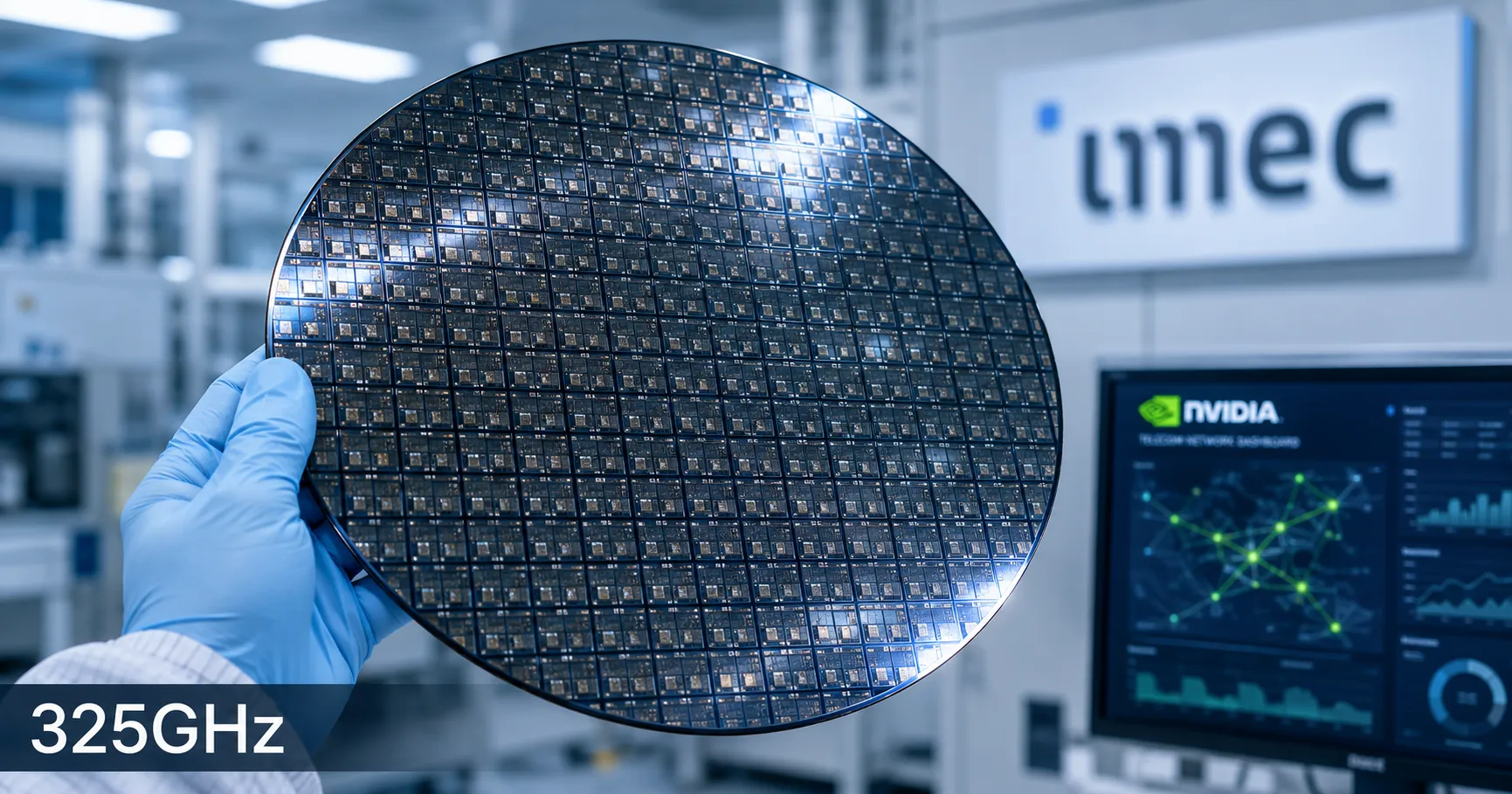
A new 6G chip platform from research lab IMEC solves a key manufacturing problem, paving the way for cheaper, faster connectivity in future devices.
Key Takeaways
- IMEC's new platform allows expensive 6G-capable materials to be integrated onto cheaper, standard silicon wafers, solving a major cost problem.
- The technology enables performance up to 325GHz, covering the sub-terahertz bands required for future 6G networks.
- This breakthrough aligns with Nvidia's vision for AI-powered telecom networks, but the technology is still 5-7 years from commercial-scale production.
On this page
Belgian research institute IMEC has developed a new chip platform that significantly lowers the cost barrier for 6G hardware. The breakthrough enables the use of high-performance materials on standard, scalable silicon wafers, a critical step toward making next-generation networks commercially viable.
This development directly addresses the economics of deploying networks that will operate at much higher frequencies than current 5G technology.
What is IMEC's 6G Chip Breakthrough?
The core challenge for 6G is that it requires compound semiconductors like indium phosphide to handle the necessary sub-terahertz frequencies. According to The Next Web, these materials are typically manufactured on small, expensive wafers that don't scale efficiently. IMEC's solution uses a 300mm silicon interposer as a carrier, allowing small, high-performance "chiplets" to be integrated onto a standard, cost-effective silicon production line.
This hybrid approach allows designers to get the best of both worlds. The expensive compound semiconductor chiplets handle the demanding radio frequency (RF) tasks, while cheaper silicon handles digital interconnects and passive components. Both sources agree this mix-and-match platform is key to reducing costs and improving scalability.
| Feature | Specification | Source |
|---|---|---|
| Platform | 300mm RF silicon interposer | The Next Web |
| Max Frequency | Up to 325GHz with record-low signal loss | The Next Web |
| Core Technology | Integration of III-V compound semiconductor chiplets | The Next Web, TechRadar |
| Key Innovations | High-density embedded capacitors (MIMCAPs), scalable modeling, laser-assisted bonding | The Next Web |
Why This Matters for Nvidia and AI
This manufacturing advance is particularly relevant to Nvidia's strategic push into the telecom sector. CEO Jensen Huang envisions future 6G radio access networks functioning as AI computers, a concept that hinges on the availability of powerful, affordable hardware. TechRadar reports that Nvidia has already invested $1 billion for a 2.9% stake in Nokia and is building a coalition of telecom leaders to create AI-native 6G platforms.
IMEC's work provides a potential solution to the silicon bottleneck that could otherwise stall this vision. By making the underlying RF chips cheaper and more reliable to produce at scale, the platform could accelerate the convergence of AI and communications. This shift could signal a new era for AI agents by embedding them directly into the network fabric.
Is 6G Hardware Ready for Production?
The new platform is a significant milestone, but 6G hardware is not yet ready for mass production. In a statement reported by both outlets, IMEC's Xiao Sun confirmed the next step is to advance the platform's technology readiness to support low-volume manufacturing. The gap between a research breakthrough and a commercial chip is typically five to seven years.
The timeline, however, aligns with industry expectations. 6G network standardization is not expected to begin until 2028 at the earliest. The catch is that IMEC's platform must mature from its current state to high-volume production readiness to intersect with the moment the telecom industry needs it. This progress makes the future of ubiquitous, high-speed connectivity more tangible, but its deployment remains several years away.
References:
- The Next Web, IMEC built a chip platform that works up to 325GHz, and it could make 6G hardware cheap enough to actually deploy. Accessed on Jun 16, 2026
- TechRadar, Why IMEC’s new 6G chip breakthrough is exactly what Nvidia’s Jensen Huang is looking for right now. Accessed on Jun 16, 2026
About the author
The Mixstackrr Team is a group of writers and editors with more than 10 years of combined experience in SEO and consumer tech. We test devices, dig through settings, and turn everyday tech problems into clear, step-by-step guides anyone can follow.