
AI-Powered SEO: Tools for Predictive Keyword Research & Optimization

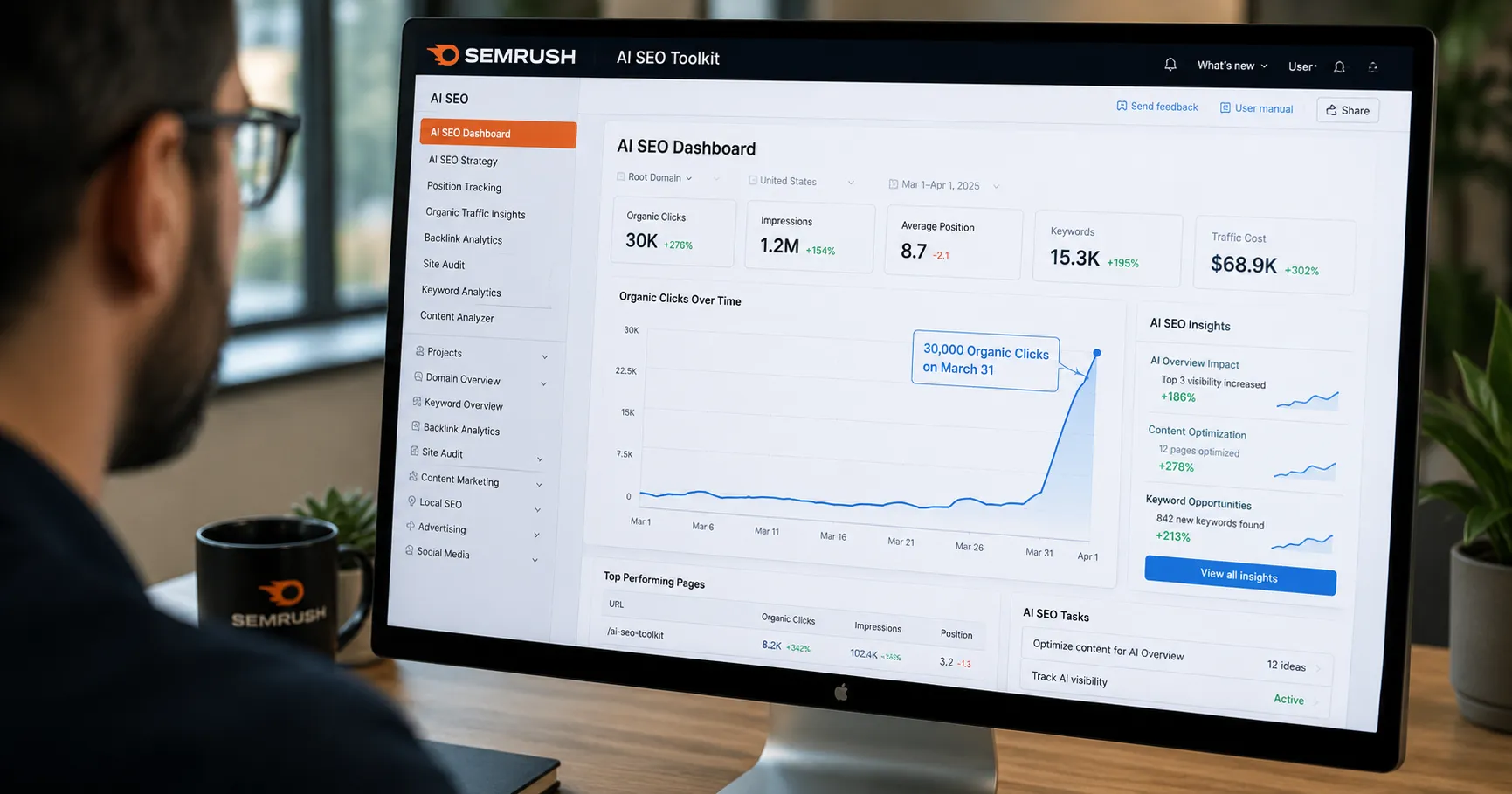
AI is transforming SEO from a reactive process to a predictive one. Discover the next generation of tools that forecast keyword trends, analyze content gaps for AI search, and optimize your articles in real-time.
Key Takeaways
- Predictive AI tools forecast which keywords will become popular, allowing marketers to create content before demand peaks.
- AI-powered gap analysis identifies not just missing keywords but also why competitors rank in AI-generated answers, focusing on E-E-A-T signals.
- Real-time content optimizers provide actionable guidance to ensure content is 'AI search ready,' improving its chances of being surfaced by LLMs.
On this page
Artificial intelligence shifts SEO strategy from reacting to existing search volume to predicting future trends. The next generation of SEO platforms uses AI to forecast topics and perform deep semantic optimization. You gain a competitive edge by identifying opportunities before they become saturated.
Tools like the Semrush AI SEO Toolkit lead this evolution. They move beyond traditional difficulty metrics to provide a dynamic approach to content strategy.
Building a Predictive Engine with RSS and Sitemaps
You do not have to rely solely on enterprise software to forecast trends. I built a private workflow for my internal team that mimics the conceptual framework of high-end tools. The engine combines multiple industry sitemaps and RSS feeds to generate hot topic clusters through AI.
The system identifies emerging conversations early and structures the initial narrative. Total automation invites failure.
I manually review and approve every single hot topic before the AI generates a final draft. This step is non-negotiable.
Content that predicts the future but adds no distinct human value functions as useless spam. The machine handles the data aggregation, but you must inject the nuanced expertise that algorithms lack.
Predicting Viral Trends Across Google Surfaces
This hybrid approach proves its worth when a forecasted topic hits critical mass. Implementing this custom engine allowed the site to capture a massive surge in interest almost instantly.
The system flagged an emerging narrative through the RSS aggregation. Manual approval and value injection readied the content just before search demand peaked.
The result was a synchronized traffic spike across multiple Google platforms on a single day, proving the effectiveness of early trend identification.
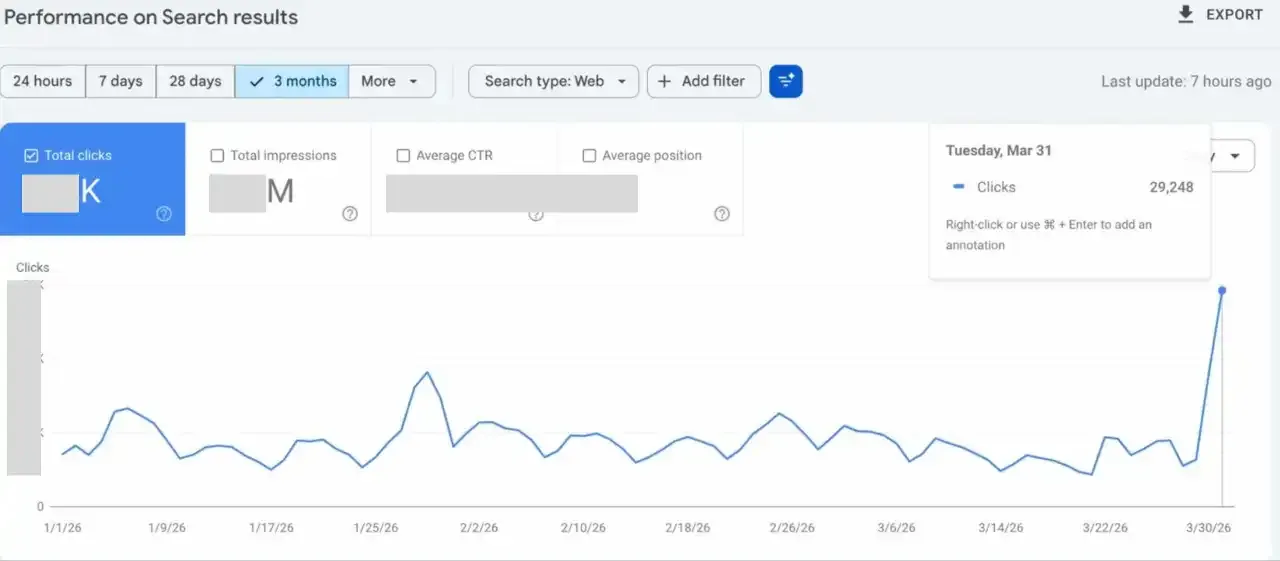
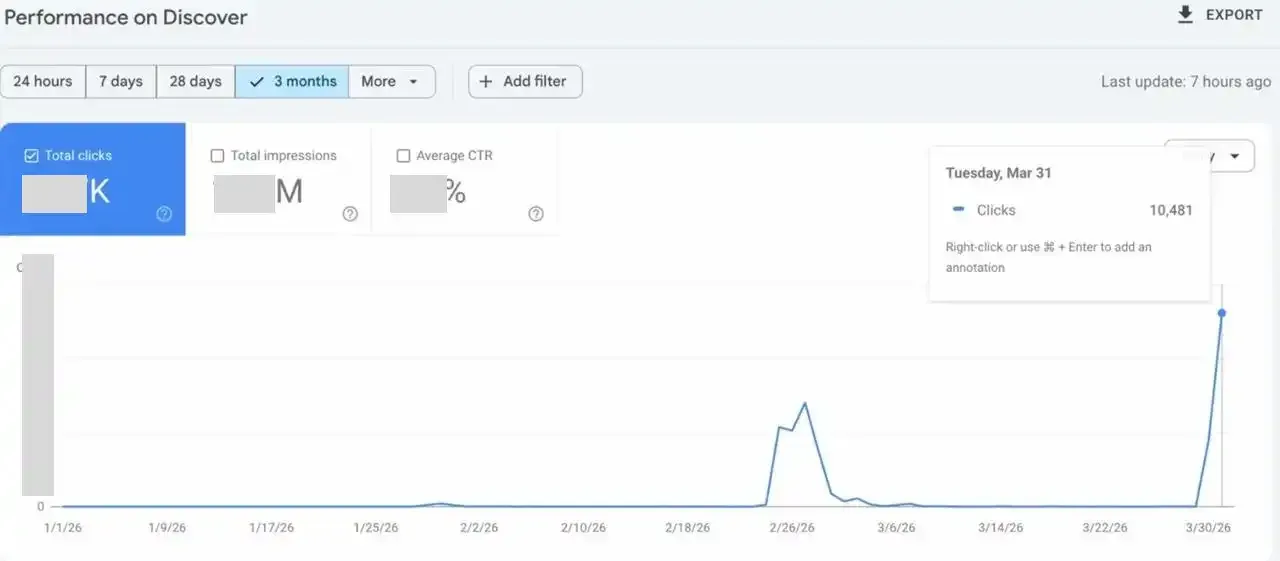
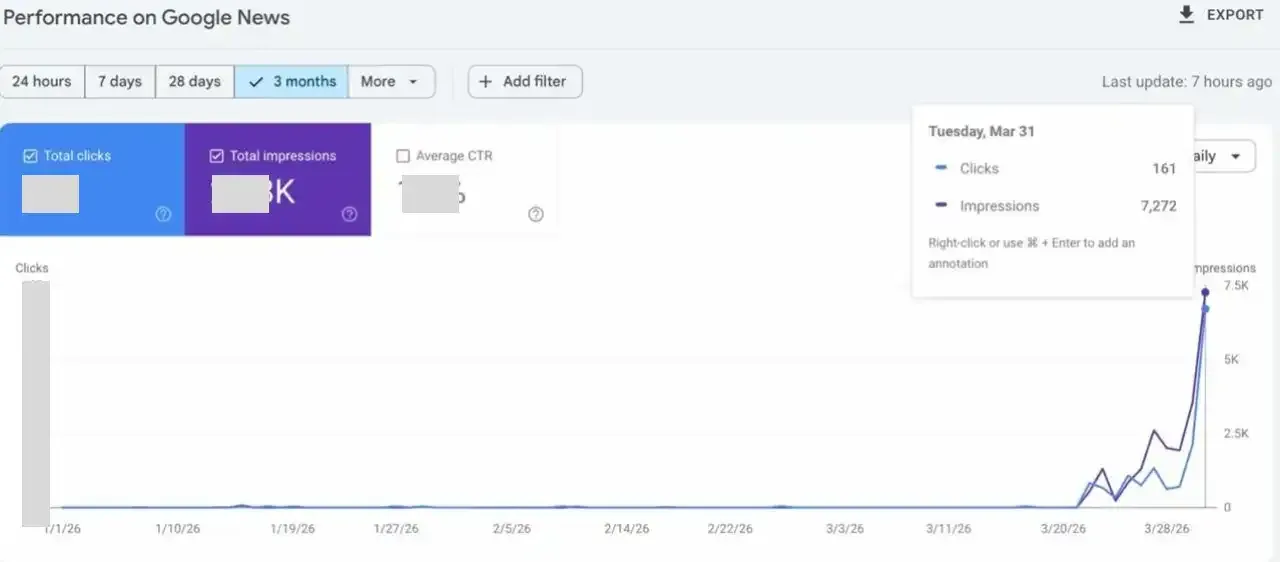
The data from March 31 illustrates the core benefit of predictive SEO. You stop chasing established keywords and start positioning yourself ahead of the curve.
You capture initial interest through AI forecasting, and you sustain that visibility by ensuring the final output delivers genuine value to the reader.
Forecasting Keyword Trends with Enterprise AI
Commercial tools execute a similar predictive process at scale. A significant advance in research is the ability to forecast which topics will gain momentum. These platforms analyze billions of data points to model potential traffic growth.
According to Semrush, their platform provides domain-specific estimates for targeting specific keywords. Their forecasting tools model potential visibility gains. This helps your team prioritize efforts based on projected impact rather than historical data alone.
Automating Semantic and Content Gap Analysis
AI also identifies why your content fails to rank against competitors in AI-generated search answers. It automates the discovery of gaps in expertise and trust signals. Choosing the right AI marketing tools remains critical for leveraging these analytics effectively.
Key features that assist with this analysis include:
- LLM Gap Analyzer: This tool examines competitor content to highlight missing facts or weak trust signals causing your pages to underperform.
- Competitor Research Reports: AI pinpoints specific prompts where competitors appear in search answers but your brand does not.
- Keyword Strategy Builder: The system clusters related terms into pillar content and subtopics to build structured authority.
This analysis bypasses simple keyword matching. It focuses on the semantic completeness required by Large Language Models to surface your URLs.
Real-Time Optimization for AI Search
Identifying trends requires immediate follow-through during the writing phase. AI-powered writing assistants provide real-time guidance to structure content for human readers and crawlers alike.
As detailed by Digipix Inc, tools evaluate drafts for AI search readiness and offer actionable fixes based on how language models process information. Writing assistants fine-tune sentence length and clarity. This makes the text tighter and easier to parse.
Integrating predictive analysis with real-time optimization uncovers hidden opportunities. You establish authority in an evolving search landscape.
Proactive forecasting combined with mandatory human value addition guarantees modern SEO success.
About the author
The Mixstackrr Team is a group of writers and editors with more than 10 years of combined experience in SEO and consumer tech. We test devices, dig through settings, and turn everyday tech problems into clear, step-by-step guides anyone can follow.