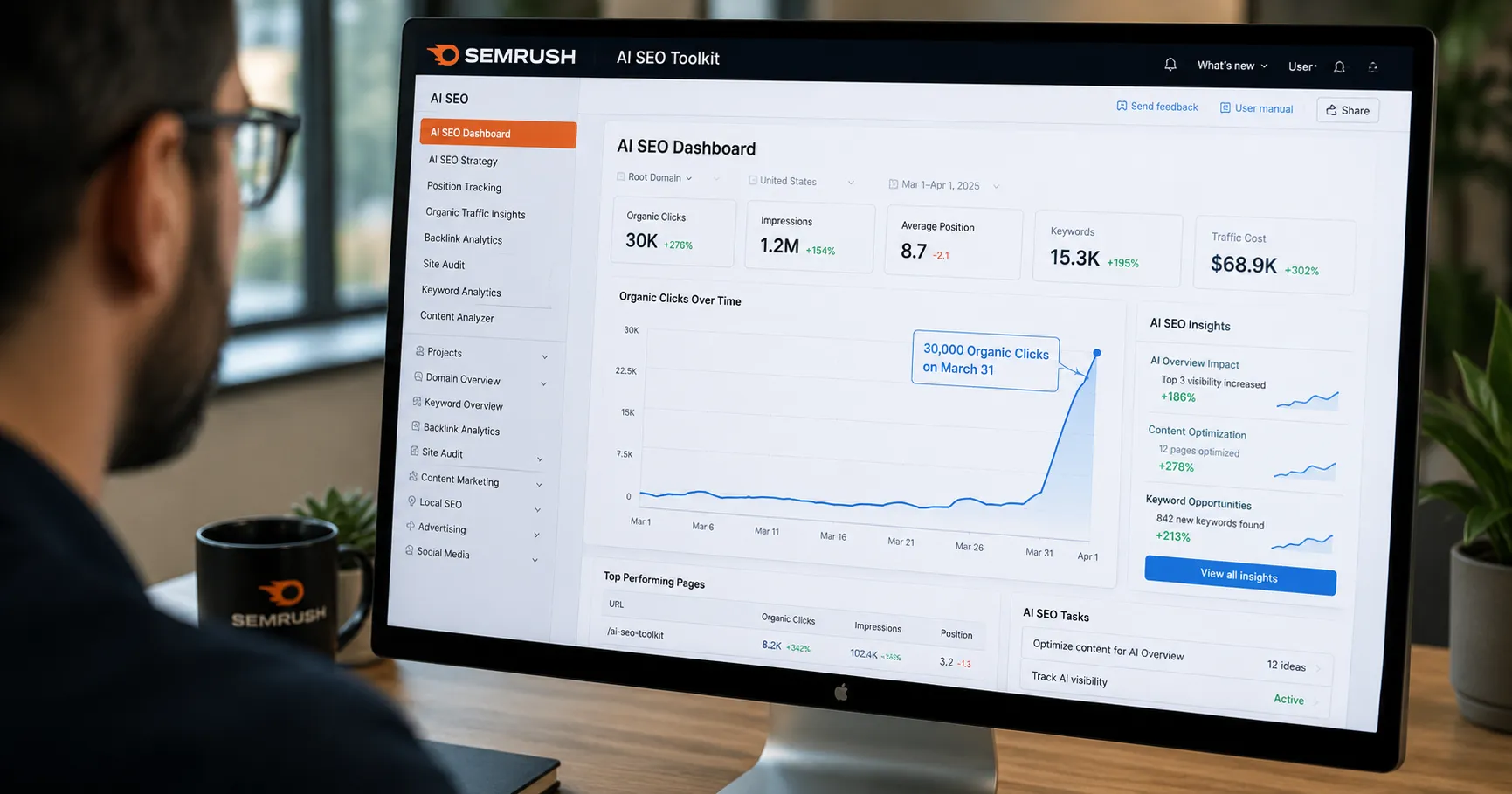
The Role of Agentic AI in Automating Marketing Workflows

Discover how agentic AI is moving beyond content creation to autonomously plan, execute, and optimize entire marketing campaigns without human oversight.
Key Takeaways
- Agentic AI is proactive and goal-oriented, moving beyond the reactive content creation of generative AI to execute entire workflows.
- In marketing, it can autonomously manage multi-channel campaigns, optimize ad spend in real-time, and handle complex customer service tasks.
- This technology shifts the marketer's role from manual execution to high-level strategy, goal-setting, and system oversight.
On this page
Agentic AI refers to artificial intelligence systems designed to act independently to achieve specific objectives. Unlike familiar generative AI tools that create content in response to a prompt, agentic AI can perceive its environment, reason through information, plan actions, and execute complex, multi-step tasks autonomously. For marketers, this represents a fundamental shift from using AI as a content assistant to deploying it as an autonomous workflow manager.
These systems use large language models (LLMs) as their cognitive engine but go a step further by taking action. The core concept is "agency" - the capacity for independent, goal-driven behavior that can manage entire processes with minimal human intervention.
How Agentic AI Differs From Generative AI
The key distinction between agentic and generative AI lies in their function and autonomy. Generative AI is primarily reactive; it excels at creating text, images, or code based on your specific input. You give it a prompt, and it produces an output.
Agentic AI is proactive. It takes a high-level goal and determines the steps needed to achieve it. According to IBM, agentic systems apply generative outputs toward specific goals and execute actions in underlying systems. For example, a generative AI model can write five versions of ad copy. An agentic AI system can take those five versions, deploy them in a campaign, monitor their performance, reallocate the budget to the best-performing ad, and then generate new variants based on the results, all without you intervening.
Key Applications for Marketing Automation
Agentic AI is poised to automate some of the most complex and time-consuming marketing tasks, allowing you to focus on strategy and creative direction rather than manual execution.
Autonomous Multi-Channel Campaign Management
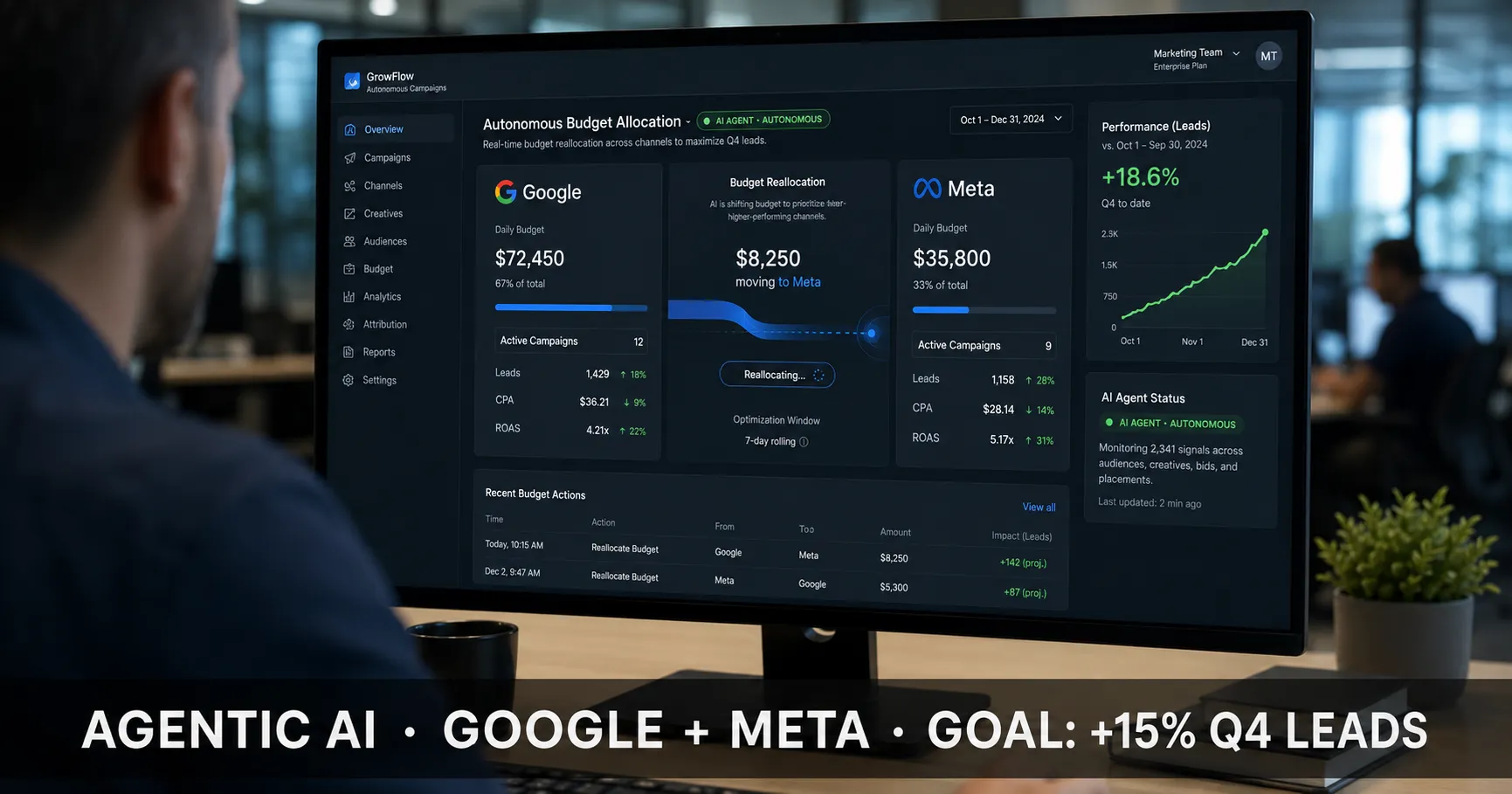
An agentic system can orchestrate an entire multi-channel campaign from a single objective. You can task it with a goal like "increase Q4 leads by 15%." The agent can then plan the strategy, select target audiences, generate content for email, social media, and display ads, and launch the campaign across all platforms. It continuously monitors performance and adjusts tactics in real time to ensure messaging, tone, and frequency are optimized for audience behavior.
Dynamic Ad Spend Optimization
Maximizing return on ad spend (ROAS) is a constant challenge. Agentic AI automates this by dynamically adjusting bids and reallocating budgets across platforms like Google and Meta based on live performance data. These systems can test ad creatives, refine audience targeting, and shift funds to capture rising demand instantly. This level of autonomy means that in a practical sense, AI agents are now employees - dedicated digital specialists working to maximize your budget around the clock.
Proactive Customer Interactions
Customer service is also being transformed. Agentic AI enables autonomous and hyper-personalized engagement that goes beyond simple chatbots. As explained by Amazon Web Services, these agents can anticipate customer needs and independently initiate actions. For instance, an agent can manage complex service requests like processing a refund or updating billing information without human help. They maintain context over long conversations and only escalate to a human agent when absolutely necessary, reducing wait times and freeing up your support team for more strategic work.
About the author
The Mixstackrr Team is a group of writers and editors with more than 10 years of combined experience in SEO and consumer tech. We test devices, dig through settings, and turn everyday tech problems into clear, step-by-step guides anyone can follow.