
Midjourney's Health Scanner: What to Know About the AI Pivot

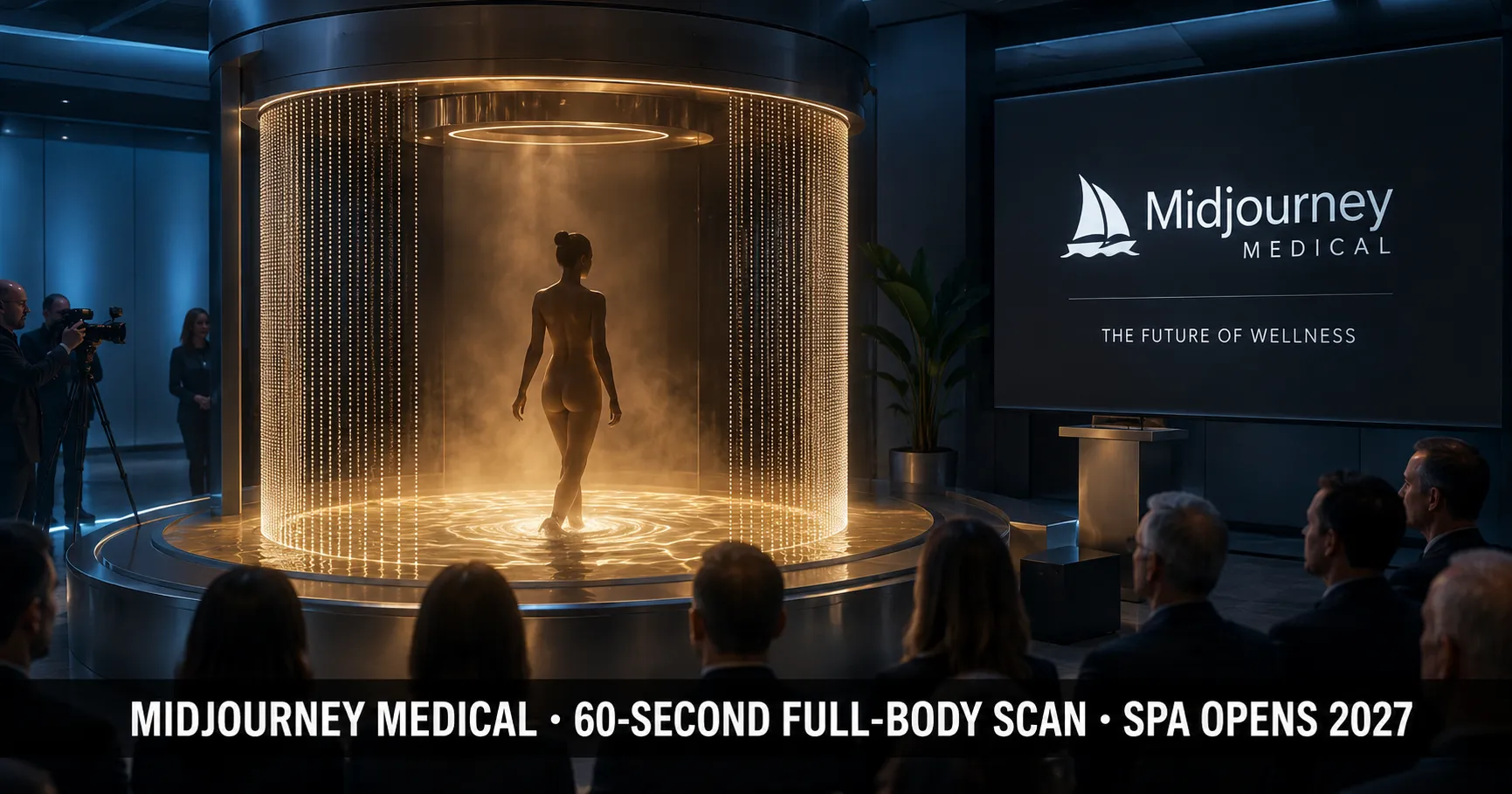
Midjourney is moving from AI art to health tech with a full-body ultrasonic scanner. Learn how it works, its ambitious goals, and the privacy questions it raises.
Key Takeaways
- Midjourney is pivoting from AI image generation to health tech with a 60-second, water-based ultrasonic body scanner.
- The technology aims to be faster and safer than an MRI but is not yet FDA-approved for medical diagnostics.
- The company plans to launch 'spas' for scanning, but key details on its consumer data privacy policy are still unannounced.
On this page
Midjourney, the company famous for its text-to-image AI generator, has announced a surprising pivot into medical hardware. The new venture, Midjourney Medical, is developing a full-body ultrasonic scanner, a significant departure from its creative AI roots.
This diversification highlights a broader trend in the tech industry, where building a resilient business can mean mitigating the risks of relying on a single product line, a challenge discussed in the context of [AI model risk](https://www.mixstackrr.com/ai/ai-model-risk-single-vendor-liability).
What is the Midjourney Health Scanner?
The Midjourney Scanner is a machine designed to create a detailed 3D map of your body in under 60 seconds. Unlike an MRI, which can take 60 to 90 minutes, this device uses ultrasonic waves in a water-based environment to analyze your body's composition, including muscle, fat, bone, and organs.
The company's vision is to make this technology as casual as a trip to the spa. In fact, Midjourney plans to build and open dedicated spas, with the first location planned for San Francisco. The catch is that for now, the scanner is focused on 'body composition maps' and will require future FDA approval to be used for official medical diagnostics, according to The Verge.
How the Technology Works: A Synthesis of Reports
The scanning process involves stepping onto a platform that lowers you into water. As you descend, your body passes through a sensor ring that emits and records ultrasonic waves, similar to how dolphins use echolocation. This data is then processed to build the 3D image.
However, reports from different outlets provide slightly different technical details, highlighting the project's early stage. Here’s a breakdown of what has been reported so far.
| Feature | According to Engadget | According to The Verge |
|---|---|---|
| Sensor Array | A ring made of 'half a million squares the size of a grain of sand.' | Uses '40 Butterfly Ultrasound-on-Chip imaging modules per system.' |
| Processing Power | Not specified. | Two petaflops of processing power. |
| Development Partner | Butterfly Network, with a licensing deal signed in November 2025. | A partnership with ultrasound tech company Butterfly Network. |
| First Spa Opening | Sometime 'next year' (implying 2027). | 'Before the end of 2027' in San Francisco's Union Square. |
The Roadmap and Unanswered Questions
Midjourney has an ambitious timeline for its medical venture. The company plans to spend the next 12 months refining its algorithms and hardware, with the first spa in San Francisco set to open in 2027. The project is led by Ahmad Abbas, who previously worked on the Apple Vision Pro.
The long-term goal is to secure FDA approval for diagnostic capabilities, launch a third-generation machine with custom silicon in 2028, and have 50,000 scanners available worldwide by 2031. The most significant unanswered question is data privacy. The Verge notes that while Midjourney says it takes privacy seriously, specific details on its data policies have not yet been released, a critical point for any consumer health product.
References:
- Engadget, Midjourney, the AI image generator, is developing a full-body ultrasonic scanner. Accessed on Jun 18, 2026
- The Verge, Midjourney goes from generating cat images to full-body ultrasound scans. Accessed on Jun 18, 2026
About the author
The Mixstackrr Team is a group of writers and editors with more than 10 years of combined experience in SEO and consumer tech. We test devices, dig through settings, and turn everyday tech problems into clear, step-by-step guides anyone can follow.