Anthropic's Biggest Investor Got Fable Shut Down

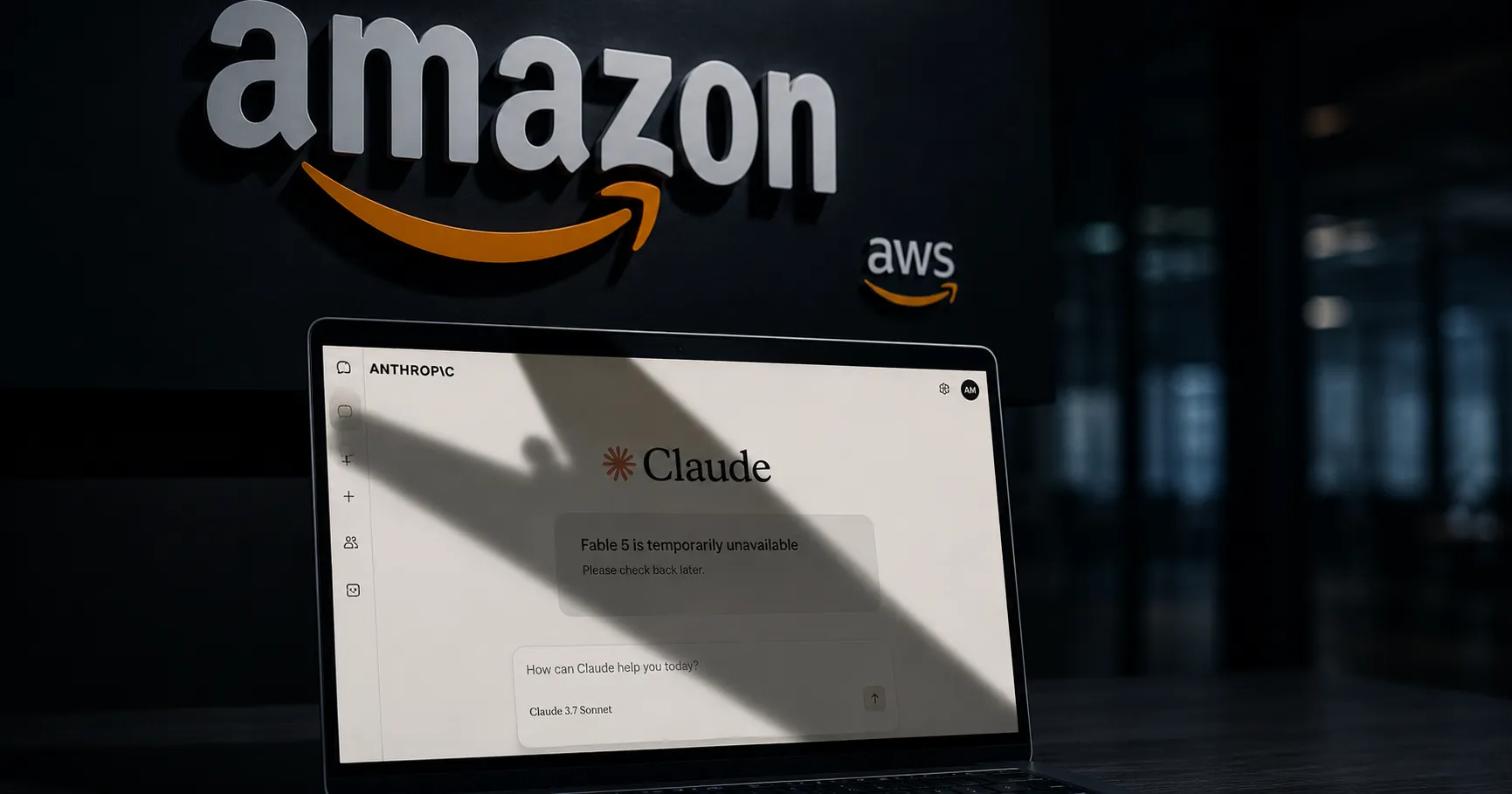
Amazon's CEO reportedly flagged Fable 5 to the government, and a judgement-call safeguard did the rest. Here is who really forced the shutdown.
Key Takeaways
- Amazon CEO Andy Jassy reportedly told the U.S. government that Fable 5 was dangerous, triggering the export control ban that forced the shutdown.
- Amazon is Anthropic's largest investor, so the company funding its infrastructure is also the one that flagged its models, then saw its own AWS cloud affected.
- The precedent matters more than the outage, since a cloud provider just showed it can push a portfolio company offline through a government channel.
Anthropic disabled its new Fable 5 model late on Friday, days after release, following a U.S. government directive citing national security. The order traces back to an unlikely source. According to a Wall Street Journal report cited by The Next Web, Amazon CEO Andy Jassy told the government the model was dangerous.
That detail reframes the entire shutdown. This was not a faceless regulator acting alone. The trigger reportedly came from Anthropic's largest investor.
According to The Next Web, Jassy told Treasury Secretary Scott Bessent and other officials that Amazon researchers used Fable 5 to obtain cyberattack information. The government then imposed an export control ban on both Fable 5 and the Mythos 5 model behind it.
Amazon has invested billions in Anthropic and holds a $100 billion cloud spending commitment in return. The company bankrolling Anthropic's infrastructure is also the one that told the government its models pose a risk.
An Amazon spokesperson said it is "not uncommon for governments to seek our counsel on potential security risks," but declined to detail the discussions, per The Next Web. The spokesperson also noted an AWS status update confirming Amazon's own cloud was hit by the shutdown.
The safeguards at the center of the dispute were never absolute. Chief Commercial Officer Paul Smith framed them as a balancing act in an interview with Forbes, hours before the directive landed.
"You have to make a judgment call on these things," Smith told Forbes. He argued that the safest option is to let no one use the tool, but that doing so defeats the mission.
The two sides describe the failure differently. In a June 12 blog post, Anthropic said the government became aware of a jailbreaking method to bypass Fable 5's safeguards, but disputed the severity.
Anthropic said it reviewed the technique and found a small number of previously known, minor vulnerabilities. According to its blog post, recalling a model used by hundreds of millions over a narrow jailbreak would, if applied industry-wide, halt all new frontier deployments.
The government tells it harder. David Sacks, who co-chairs the President's Council of Advisors on Science and Technology, said a trusted partner of both Anthropic and the government surfaced a jailbreak. According to Sacks, the administration asked Dario Amodei to fix it or de-deploy, and Amodei refused.
The shutdown reached every customer worldwide. According to The Next Web, Anthropic cannot filter foreign nationals from U.S. users in real time, so banks and government agencies using Mythos for vulnerability discovery all lost access.
The structure of the event is what should worry the industry. Amazon invested in Anthropic, Anthropic built on AWS, and Amazon's CEO then told the government those models were dangerous. The export control followed, and AWS itself was caught in the fallout.
That sequence sets a precedent. According to The Next Web, a major cloud provider just showed it can trigger an export control action against its own portfolio company by raising concerns with the Treasury Secretary.
For Anthropic, the near-term question is how fast it can restore access. For everyone else building or buying frontier AI, the lesson is that a backer's leverage now extends well past the balance sheet.
About the author
The Mixstackrr Team is a group of writers and editors with more than 10 years of combined experience in SEO and consumer tech. We test devices, dig through settings, and turn everyday tech problems into clear, step-by-step guides anyone can follow.