
Deezer Will Scan Your Spotify Playlists for AI Slop Now

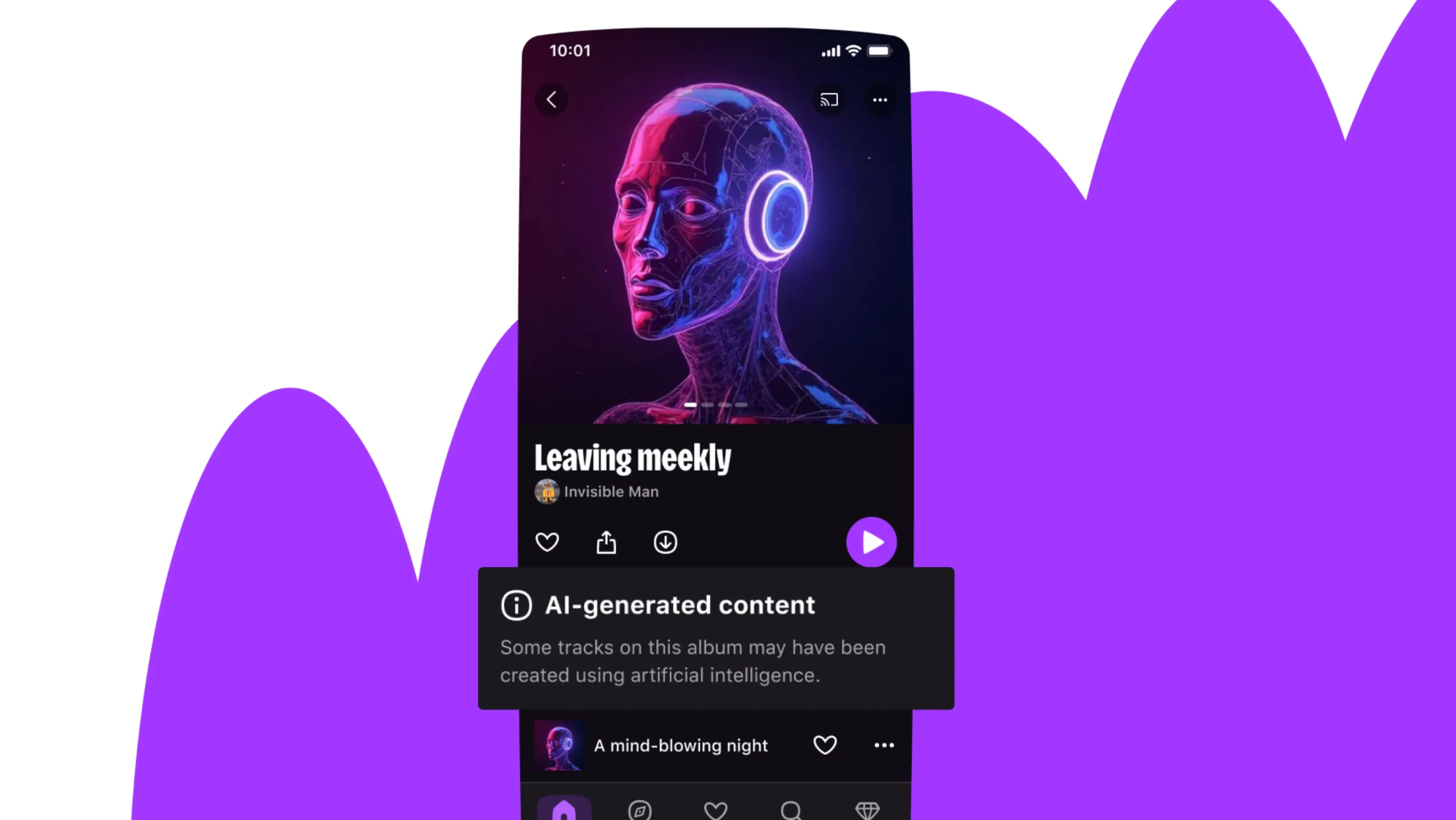
Deezer just opened its AI music detector to everyone, scanning playlists on Spotify, Apple Music, and 18 more rival services for free.
Key Takeaways
- Deezer's free detector now scans AI music across about 20 rival platforms, including Spotify and Apple Music.
- With 75,000 AI tracks uploaded daily and up to 85% fraudulent, the launch targets a fast-growing problem.
- Deezer wants competitors and labels to license the same detection technology before AI distorts royalties.
Deezer has launched a free online tool that scans playlists on rival streaming services for AI-generated music. The detector works across roughly 20 major platforms, reaching listeners before the wider industry agrees on common rules.
The move matters because AI music is flooding services faster than most apps will admit publicly. Deezer is betting that listeners want to know how much of their library is machine-made right now.
The tool links to a streaming account, imports the user's playlists, then returns a score and a shareable result. According to Digital Trends, the scanner works across 20 common services and is available in 27 languages.
Deezer says the detector reaches people who never open its own app. That design choice doubles as marketing, since the company is keen to convert curious users after a scan.
The scale of the problem helps explain the timing of the launch. Engadget reported that 75,000 AI-generated songs are uploaded to Deezer each day, representing 44% of total uploads.
The detector also exposes how much synthetic music already hides in personal libraries. Digital Trends reported that 43% of people arriving from other services already have AI-generated tracks in their playlists.
Why Deezer is opening the tool to everyone
Deezer wants other companies to adopt the same underlying detection system. The CEO framed the public launch as a challenge to competitors who have not matched its stance.
"No other company has followed our lead yet," said Deezer CEO Alexis Lanternier in a statement. He added that nearly half of users joining Deezer from another platform carry AI tracks in their playlists.
The technology can already identify tracks from major generative models. According to Digital Trends, it recognizes output from Suno and Udio and can expand as more examples arrive.
What happens to AI tracks once detected
Detection is only the first step in Deezer's broader cleanup effort. The company already removes AI-generated tracks from algorithmic recommendations and editorial playlists.
The fraud problem gives the effort financial weight. Engadget reported that up to 85% of AI uploads are fraudulent, copying human artists and stealing their royalties.
Deezer says its system flags these tracks with strong reliability. According to Engadget, the company claims it can detect such songs with over 99% accuracy.
Rival apps are still deciding how far to push generative features themselves. Digital Trends noted Spotify is experimenting with AI-made covers and remixes while Deezer focuses on cleanup.
The tool leaves some questions open for listeners who get a positive result. TechRadar reported it does not reveal which specific track triggered an AI flag, making the offending song hard to find.
About the author
The Mixstackrr Team is a group of writers and editors with more than 10 years of combined experience in SEO and consumer tech. We test devices, dig through settings, and turn everyday tech problems into clear, step-by-step guides anyone can follow.