Apple & Intel Chips: What a US Partnership Could Mean

President Trump announced a potential Apple-Intel chip partnership for US manufacturing. Discover the implications for future Mac performance, pricing, and the challenges ahead.
Key Takeaways
- The deal, announced by Trump but unconfirmed by the companies, aims to bring some of Apple's chip manufacturing to the US with Intel.
- It could diversify Apple's supply chain away from a strained TSMC in Taiwan, but faces hurdles like Intel's higher costs and lower production yields.
- The US government is a key driver, holding a 10% stake in Intel and actively pushing for domestic semiconductor production.
On this page
A potential partnership between Apple and Intel to manufacture chips in the United States has been announced, but not by either company. The news came directly from a post by President Donald Trump, leaving the tech industry to analyze the implications of a deal that remains officially unconfirmed.
This move could significantly reshape Apple's supply chain and the US semiconductor landscape, but critical details on timing, cost, and scale are still missing.
What a US-Based Apple-Intel Partnership Changes
The core of this potential deal is diversifying Apple's manufacturing away from Taiwan. Currently, Apple depends almost entirely on the Taiwan Semiconductor Manufacturing Company (TSMC) for its most advanced processors, a reliance that creates significant supply chain risk. As reported by The Next Web, TSMC's cutting-edge capacity is now fiercely contested by AI chipmakers like Nvidia and AMD, making a reliable second source critical for Apple.
A partnership with Intel would provide this alternative. However, this is a major shift from Apple's strategy since 2020, which involved moving its Mac lineup away from Intel-designed processors to its own M-series chips. This new arrangement, as noted by TechSpot, would cast Intel as a contract manufacturer, building chips that Apple designs itself. This is similar to how Apple's strategy for AI involves other tech giants, as seen in its reliance on Google's AI models for Siri.
| What We Know (Sources Agree) | What Remains Unknown |
|---|---|
| The deal was announced by President Trump. | The official timeline for production. |
| Neither Apple nor Intel has confirmed specifics. | Which specific Apple chips Intel would make. |
| The goal is domestic US chip manufacturing. | The financial terms or production volume. |
| Apple is heavily reliant on Taiwan's TSMC. | How Intel's yields will compare to TSMC's. |
The Government's Role and Economic Pressure
This potential partnership is heavily influenced by US industrial policy. The Trump administration has made domestic manufacturing a key issue, taking a direct financial stake in the outcome. Last year, the government invested about $10 billion in Intel, acquiring a roughly 10% stake in the company, according to The Next Web.
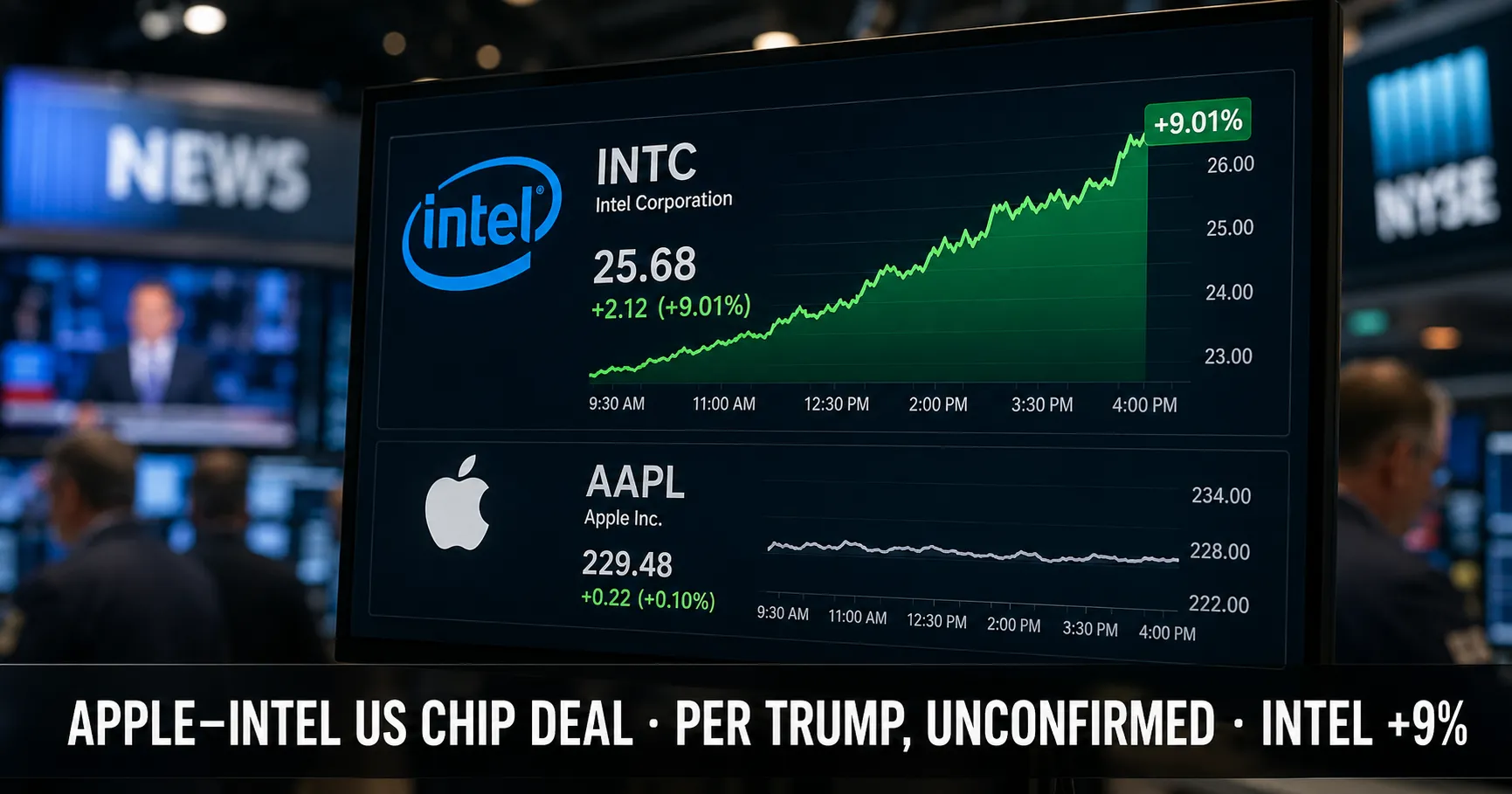
This makes the US government both a shareholder and a powerful advocate for Intel. The push for a deal is a strategic move to onshore a critical industry and reduce dependence on foreign suppliers, particularly in Taiwan. The announcement sent Intel's stock up around 9% in premarket trading, while Apple's saw a modest 0.6% increase, per CNBC.
Key Hurdles: Cost, Yield, and Trust
Despite the political momentum, significant manufacturing challenges remain. The primary concern is whether Intel can match the efficiency and performance Apple gets from TSMC. According to The Next Web, Intel's cost per chip is estimated to be around three times that of TSMC, and its production yields have historically trailed behind.
Apple has reportedly held internal discussions questioning if any non-TSMC manufacturer can meet the performance and timing standards its product roadmaps are built on. The catch is that Intel's 18A process is the first American-based node theoretically capable of producing these advanced chips, but its ability to deliver at scale for a demanding client like Apple is unproven. A first order, if it happens, would likely involve less critical chips to test the relationship before committing flagship products.
References:
- CNBC Tech, Intel rises 9% after Trump says company will partner with Apple on U.S. chip design. Accessed on Jun 18, 2026
- The Next Web, Trump says Apple will build chips with Intel in the US. Accessed on Jun 18, 2026
- TechSpot, Trump says Apple will work with Intel to build chips in the US. Accessed on Jun 18, 2026
About the author
The Mixstackrr Team is a group of writers and editors with more than 10 years of combined experience in SEO and consumer tech. We test devices, dig through settings, and turn everyday tech problems into clear, step-by-step guides anyone can follow.